 sales@wildnetedge.com
 +1 (212) 901 8616
 +1 (437) 225-7733
















































































































 ChatGPT Development & Enablement
  Hire AI & ChatGPT Experts
  ChatGPT Apps by Industry
  ChatGPT Blog
  ChatGPT Case study
  AI Development Services
  Industry AI Solutions
  AI Consulting & Research
  Automation & Intelligence





TL;DR
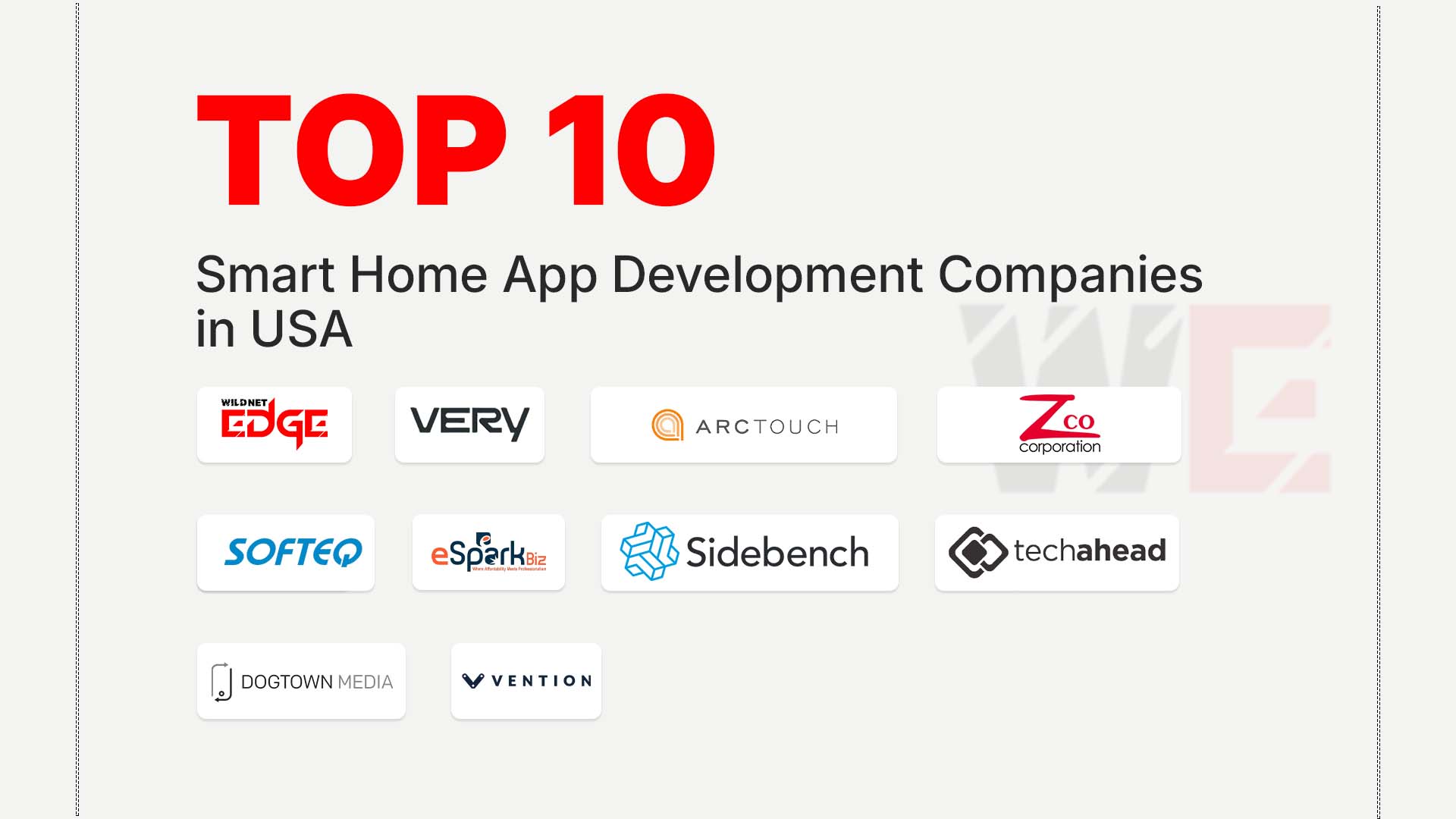
In 2026, the smart home market is moving beyond simple remote controls to fully autonomous, AI-driven living environments. This article is your definitive guide to the Top Smart Home App Development Companies in the USA. We have ranked the top 10 firms that excel in building complex Home Automation Software and seamless IoT Device Integration. We analyzed these companies based on their technical expertise in Matter protocol adoption, voice assistant integration (Alexa/Google Home), and secure edge computing.
If you are building a product for the connected home, you know that users expect magic, not just utility. They want their lights to sync with their sleep schedule, their thermostat to know when they leave work, and their security camera to distinguish between a delivery driver and a stray cat. You are likely looking for a partner who can build more than just a mobile interface. You need a team that understands firmware handshakes, low-latency local control, and the complexity of mesh networks like Zigbee and Thread.
That’s where Top Smart Home App Development Companies come into play. They are your perfect partner who can build sophisticated Home Automation Software or custom apps that handle IoT Device Integration across hundreds of brands to turn your hardware into a beloved consumer experience. This guide is built to help you find that partner. I’ve analyzed the US market to identify the firms that have the deep technical expertise to build a platform that is robust, secure, and truly transformative for the modern home.
Comparative Matrix: Top 10 Smart Home App Development Companies
| Company | Core Services | Industries Served |
| Wildnet Edge | Enterprise IoT, AI Home Automation, Edge AI | Consumer Electronics, Real Estate, Energy |
| Very, LLC | IoT Engineering, Hardware & Software, Design | Consumer Electronics, Industrial, Smart Home |
| ArcTouch | Connected Experiences, Mobile & Web Apps | Consumer Goods, Media, Smart Home |
| Zco Corporation | Mobile Apps, Enterprise Software, AR/VR | Healthcare, Public Safety, Smart Home |
| Softeq | Low-Level Programming, Firmware, Driver Dev | Automotive, Consumer Tech, Industrial |
| eSparkBiz | Digital Transformation, IIoT, Enterprise Mobility | Construction, Healthcare, Smart Building |
| Sidebench | UI/UX Design, Product Strategy, Mobile Apps | Healthcare, FinTech, Consumer IoT |
| TechAhead | Mobile App Dev, IoT, Smart Mobility | Transportation, Logistics, Smart Home |
| Dogtown Media | mHealth, IoT, Mobile App Development | Healthcare, FinTech, Home Automation |
| Vention | Staff Augmentation, IoT Dev, Cloud | FinTech, HealthTech, Smart Home |
Top 10 Smart Home App Development Companies in USA for 2026
1. Wildnet Edge
- Best for: Enterprise-scale, AI-driven smart home ecosystems and complex hardware integrations.
- Key highlights:
- Over 19 years of industry experience (Founded 2005).
- Enterprise-scale team of 350+ certified engineers.
- Proven track record with 8,000+ projects delivered.
- CMMI Level 3 appraised for mature, repeatable processes.
Wildnet Edge stands out because they don’t just build apps; they build entire intelligent home ecosystems. As one of the Top Smart Home App Development Company for 2026, they offer everything from Home Automation Software to deep IoT Device Integration, cloud platforms, and edge AI.
Their strength is their ability to take a hardware product and turn it into a complete, consumer-ready experience. Whether you’re building smart lights, connected appliances, security systems, or a full home hub, they treat every device as part of a bigger, intelligent system.
What makes them different is their AI-first mindset. They build features like predictive energy usage, automatic scene suggestions, behavior-based routines, and context-aware automation that feel natural to users. With 350+ engineers and over 19 years of experience, they deliver enterprise-grade reliability, the kind needed for real homes, not prototypes.
If you’re building something ambitious, scalable, and future-proof, Wildnet Edge is the partner you want in your corner.
Projects Built (Highlights):
- AI-Powered Energy Management System: Architected a smart home platform for a utility provider. The app uses AI to learn user heating/cooling preferences and automatically adjusts smart thermostats to lower energy bills by up to 15%.
- Unified Smart Home Hub: Developed a central control app that integrates devices from multiple manufacturers (lights, locks, cameras) into a single, intuitive interface using the Matter protocol.
- Secure Video Doorbell Cloud: Built a scalable video streaming backend for a smart doorbell startup. The solution features real-time motion detection, secure cloud storage, and sub-second notification latency.
- Pros:
- Enterprise-scale (350+ engineers) for handling complex, multi-device IoT rollouts.
- AI-first approach integrates edge computing and predictive automation.
- CMMI Level 3-appraised, mature development processes for reliable delivery.
- Full-lifecycle partner for strategy, firmware consulting, app development, and support.
- Cons:
- Their robust, enterprise-grade security protocols might be “over-engineering” for a simple, hobbyist-level smart plug prototype.
- Their focus on deep custom engineering and data integration represents a strategic investment, not a low-cost option for basic Bluetooth connectivity apps.
2. Very, LLC
- Best for: End-to-end IoT engineering, from hardware prototyping to software.
- Key highlights:
- 100% focused on IoT.
- Agile hardware and software development.
- US-based team with a fully distributed model.
Very is one of those companies that understands the smart home at the “guts and wires” level. If your product requires both hardware and software (like smart thermostats, doorbells, or connected appliances), they’re a strong fit. They don’t focus on building apps, they help prototype circuits, handle firmware, and make sure everything talks to each other.
Their style is very collaborative. They work in small, fast teams and treat hardware and software development as one combined process, which makes debugging and iteration quicker. For founders and consumer electronics companies, this takes a lot of stress out of the early stages.
They’re not a “cheap and fast” shop, they focus on deeper engineering challenges. But if your smart home device needs reliable IoT Device Integration and a companion app that responds instantly, Very has the skills and discipline to get it right.
- Pros:
- Specialized expertise in both hardware engineering and software development.
- Agile methodology applied effectively to physical product development.
- Cons:
- Their premium, end-to-end model is expensive for software-only projects.
- Highly selective with clients; they look for complex engineering challenges.
- Not a generalist app shop; they only do IoT.
3. ArcTouch
- Best for: Creating “lovable” consumer experiences for connected home brands.
- Key highlights:
- “Lovable” app design philosophy.
- Expertise in voice interfaces (Alexa, Google Assistant).
- Strong portfolio with major smart home brands like 3 M.
ArcTouch leans heavily into the user experience side of the smart home world. They are one of the top smart home app development companies and they focus on making apps that feel simple, friendly, and intuitive, the kind that make someone say, “Wow, this is easy.”
They work well with consumer brands, especially those launching smart home gadgets for mainstream users: air purifiers, lights, fans, sensors, appliances, and more. They also have deep experience with Alexa and Google Home integration, which is a must in 2026.
Where they shine is the onboarding experience, pairing devices, setting up rooms, linking accounts, all the tricky stuff that usually frustrates new users. If you want your app to feel smooth and “Apple-like,” ArcTouch is a strong match. They aren’t the best pick for heavy industrial IoT, but for clean, lovable consumer apps? They’re excellent.
- Pros:
- Strong expertise in voice and conversational interfaces.
- Focus on creating delightful, consumer-friendly user experiences.
- Cons:
- May lack the deep industrial engineering focus for factory automation.
- Services are priced for established brands and funded startups.
- Less focused on heavy backend data analytics than some competitors.
4. Zco Corporation
- Best for: Reliable, US-based development for established smart home enterprises.
- Key highlights:
- Founded in 1989, offering decades of stability.
- Large, US-based in-house team.
- Deep expertise in enterprise mobility and backend systems.
Zco has been around for decades, and that longevity brings a certain comfort especially in a space like smart home tech, where reliability matters just as much as innovation. If you’re a smart home company that wants a partner who won’t disappear halfway through your project, Zco is one of those teams you can count on. As one of the top smart home app development companies, they focus heavily on backend systems, strong data security, and stable app performance, which are all essential when you’re dealing with devices like cameras, smart locks, or anything tied to home safety.
What Zco does well is keep things consistent and dependable. They’re the kind of company that quietly makes sure everything works in the background your app connects smoothly, your data stays protected, and your device ecosystem stays stable as you grow. They’re not the most experimental team, and they won’t try to reinvent your product with unnecessary complexity, but that’s exactly why many established brands trust them. They’re steady, practical, and focused on long-term support, making them a safe match for businesses that prioritize stability over flashiness.
- Pros:
- Stable, long-term partner with a large US-based team.
- Deep experience with secure, enterprise-grade mobile solutions.
- Cons:
- Their primary focus is broad enterprise software, not exclusively IoT.
- May be less agile and “trendy” than smaller, startup-focused design shops.
- Premium pricing reflects their large, US-based team structure.
5. Softeq
- Best for: Low-level programming, driver development, and embedded systems.
- Key highlights:
- Founded in 1997 in Houston, TX.
- Deep expertise in C/C++ and firmware.
- Experience with complex driver and kernel-level development.
Softeq is the kind of company you go to when the “regular” developers can’t figure out what’s going on inside your device. They work deep inside the hardware layer firmware, drivers, low-level code the stuff most app teams avoid because it’s tricky and time-consuming. If your smart home product depends on stable firmware or super-precise communication between the device and the app, Softeq is a dependable choice.
They’re especially useful for companies building custom hardware like smart locks, thermostats, lighting systems, or home appliances that require reliable firmware updates and strong connectivity. They understand how sensors behave, how Bluetooth can act up in real homes, and how to make devices respond instantly without glitching.
The one thing to know is this: Softeq leans more toward engineering than shiny design. If you want a polished “Apple-like” experience, you might pair them with a UX agency. But if you want your device to actually work every time someone taps a button, Softeq knows how to build that foundation so everything runs smoothly.
- Pros:
- Unmatched expertise in low-level firmware and driver development.
- Capable of handling the full stack from chip design to cloud dashboard.
- Cons:
- Their engineering-heavy culture may lack the polished consumer UI/UX of a creative agency.
- Premium pricing for specialized, hard-to-find low-level talent.
- May be overkill for projects using off-the-shelf smart devices.
6. eSparkBiz
- Best for: Agile smart-home app development and connected device ecosystems for mid-sized enterprises.
- Key highlights:
- Founded in 2010.
- Mid-sized team (100–300 employees).
- Strong focus on IoT, smart-device apps, and cloud-connected ecosystems.
eSparkBiz is a solid contender among the Top Smart Home App Development Companies, especially for brands that need fast, flexible engineering rather than heavy enterprise-grade digital-transformation consulting. The company specializes in building smart-home mobile apps, IoT dashboards, device-control interfaces, automation workflows, and secure cloud-based backends that connect multiple sensors or home devices into a unified ecosystem.
They are particularly strong at developing smart-appliance control apps, home security monitoring interfaces, energy-usage dashboards, and multi-device synchronization, making them a good fit for appliance manufacturers, home-automation startups, and mid-sized enterprises entering the smart-home space.
- Pros:
- Deep expertise in enterprise mobility and legacy integration.
- Strong, long-term partner for comprehensive digital transformation.
- Cons:
- IoT is a component of their service, not their sole specialty.
- Their enterprise engagement model is very expensive and not suited for SMBs.
- Can be less agile than smaller, cloud-native firms.
7. Sidebench
- Best for: Strategy-led consumer IoT products with a focus on user engagement.
- Key highlights:
- Award-winning product strategy and design.
- “Co-invention” partner model.
- Strong focus on user research and testing.
Sidebench approaches product development differently. Instead of jumping straight into coding, they spend time studying how users listen to music or discover podcasts. This helps them design features that actually fit listener habits, like smarter playlist creation, simpler navigation, or better podcast queues.
They’re a good choice if you’re still shaping your idea or want to build something unique, such as a niche music community, a social audio app, or a personalized podcast hub. Their research-driven approach ensures you’re not guessing what listeners want.
Sidebench is boutique, so they don’t handle massive engineering loads, but they excel in user-focused strategy.
- Pros:
- High-touch, strategic consulting combined with development.
- Excellent track record in user research and product definition.
- Cons:
- Boutique size limits engineering capacity for massive builds.
- Strategy-first engagements require a significant upfront investment.
- Less focused on deep, backend legacy infrastructure maintenance.
8. TechAhead
- Best for: Integrating IoT and smart devices into mobile lifestyles.
- Key highlights:
- Founded in 2009.
- Strong focus on IoT and mobile app development.
- Experience with human-centric design.
TechAhead is strong in connected-device ecosystems, making them ideal if you want your music streaming app to support Alexa, Google Home, CarPlay, Android Auto, or even wearable devices. They focus heavily on user experience, ensuring that audio controls, playlists, and navigation are simple across devices.
They’re a good fit for companies that want to innovate, for example, a smart home audio interface or a music app designed for cars. Their global structure offers flexibility, though sometimes that means managing time zone differences.
- Pros:
- Strong expertise in IoT integration for smart home solutions.
- Focus on user-centric design and experience.
- Cons:
- Smaller US presence compared to some global giants.
- IoT hardware integration can drive up project costs significantly.
- Global team structure implies time-zone management is needed.
9. Dogtown Media
- Best for: Mobile-first IoT apps, specifically in MedTech and Home Health.
- Key highlights:
- Boutique agency focused on mobile and emerging tech.
- Strong expertise in Bluetooth (BLE) integration.
- Experience with FDA-regulated mobile medical apps.
Dogtown Media shines when audio and hardware meet. If you want to build a music app that connects to speakers, headphones, in-store audio systems, or location-based audio experiences, they’re equipped for that. Their specialty in IoT makes them ideal for projects that need Bluetooth connectivity, custom hardware control, or wearable device integration.
They’re a small team but highly innovative, perfect for experimental audio ideas that require deep technical problem-solving.
- Pros:
- Deep niche expertise in mHealth and Bluetooth connectivity.
- Agile, innovative team willing to tackle novel technical challenges.
- Cons:
- Small team size limits ability to scale for large enterprise IT projects.
- Highly specialized focus may not fit general home automation web portals.
- Premium pricing for their specialized mobile/IoT expertise.
10. Vention
- Best for: High-growth smart home startups needing to scale engineering fast.
- Key highlights:
- Enterprise-scale team (3,000+ employees).
- Strong focus on providing elite, dedicated development teams.
- Deep expertise in AI/ML, data engineering, and cloud platforms.
Vention is one of the top smart home app development companies, which already knows what it wants to build and needs more experienced hands to move faster. They specialize in staff augmentation, which means you can bring in senior engineers, cloud developers, IoT specialists, or AI experts to accelerate your roadmap without hiring full-time.
For smart home companies, this is useful when you need to build features like device dashboards, automation rules, energy analytics, cloud integrations, or secure firmware update workflows. Instead of outsourcing the whole project, you plug their engineers into your own team and keep control of the direction.
The benefit is speed and flexibility; you can scale up the team when you’re launching a major update and downsize when the work slows. The trade-off is that Vention doesn’t act like a strategy partner; they’re not there to define the product. They work best when you already have a plan and need high-skill people to execute it well.
- Pros:
- Access to a large pool of elite, pre-vetted engineering talent.
- Fast onboarding and the ability to scale teams up or down.
- Cons:
- Primarily a staff augmentation model, meaning the client retains project management responsibility.
- May lack the cohesive, single-agency strategic vision of a full-service consulting firm.
- Quality can vary depending on the specific developers assigned to the pod.
Our Selection Criteria: How We Chose the Top Smart Home App Development Companies
Selecting the Top Smart Home App Development Companies in the USA for 2026 required a focus on deep technical capability, hardware integration skills, and security expertise. We carefully evaluated each company using a set of key parameters.
Here’s what we looked at:
- IoT Protocol Expertise: We prioritized firms with verifiable experience in communication protocols like MQTT, CoAP, BLE, Zigbee, Z-Wave, and the new Matter standard. This is the language of the smart home, and fluency is mandatory.
- Cloud & Edge Capability: We looked for companies that excel at building Connected Solutions on major IoT cloud platforms (AWS IoT Core, Azure IoT Hub) and have experience with edge computing to process data locally on the hub or device.
- Hardware Integration: We evaluated their ability to interface with physical devices. The best firms understand firmware constraints, over-the-air (OTA) updates, and the intricacies of pairing and connectivity.
- Data Security: Smart home devices are a prime target for hackers. We assessed their ability to implement end-to-end encryption, secure authentication (PKI), and compliance with privacy standards.
- Proven Track Record: Experience matters. We considered each firm’s years in business, the complexity of their IoT projects, client portfolios, and verified success stories.
- Scalability: We assessed how each company handles high-volume data streams from thousands or millions of devices and their ability to build systems that scale with device growth.
- Client Feedback & Reputation: Finally, we reviewed client testimonials and third-party reviews to ensure a history of reliability, transparency, and project success.
Conclusion
In 2026, smart homes have become a part of everyday life. People expect their lights, locks, cameras, and appliances to work together smoothly without thinking about the tech behind them. That’s why choosing the right partner matters.
The Top Smart Home App Development Companies we covered above, especially leaders like Wildnet Edge, bring the kind of deep engineering skill needed to build reliable, secure, real-world connected systems. So, whether you’re working on Home Automation Software, planning IoT Device Integration, or creating a completely new smart home product, the right team makes all the difference.
When you hire expert teams like Wildnetedge, you’re not just paying for app development. You’re investing in a future-proof foundation for your connected business, one that’s secure, scalable, and built to support the growing smart home lifestyle your customers expect.
FAQs
Smart home app development is the process of creating mobile and web applications that communicate with and control home automation devices. This allows users to manage lighting, climate, security, and entertainment systems remotely.
Home Automation Software serves as the central “brain” of a smart home. It connects various devices (often from different brands), allowing them to work together through rules, schedules, and scenes (e.g., “Good Morning” scene turns on lights and starts coffee).
IoT Device Integration is the technical process of making a physical device (like a lock or bulb) communicate with a software application. This involves using APIs, SDKs, and communication protocols like Bluetooth, Wi-Fi, or Zigbee.
The cost is generally higher than a standard mobile app due to hardware integration complexity. A simple companion app might cost $40,000-$60,000. A fully integrated enterprise IoT platform with custom firmware support and analytics from one of the Top Smart Home App Development Companies can cost $150,000 to over $500,000.
Matter is a new, industry-standard connectivity protocol designed to make smart home devices from different manufacturers work together seamlessly. Top development companies are now building apps that support Matter to ensure future-proofing.
Smart home devices control physical access and privacy. A security breach could allow a hacker to unlock a door or spy through a camera. Secure app development ensures that the communication channel is encrypted and authenticated.
Yes. Most modern smart home apps are built using cross-platform frameworks like React Native or Flutter, or native development for both platforms, ensuring that all members of a household can control the home regardless of their phone type.

Managing Director (MD) Nitin Agarwal is a veteran in custom software development. He is fascinated by how software can turn ideas into real-world solutions. With extensive experience designing scalable and efficient systems, he focuses on creating software that delivers tangible results. Nitin enjoys exploring emerging technologies, taking on challenging projects, and mentoring teams to bring ideas to life. He believes that good software is not just about code; it’s about understanding problems and creating value for users. For him, great software combines thoughtful design, clever engineering, and a clear understanding of the problems it’s meant to solve.



 based on 1200+ reviews



