sales@wildnetedge.com
 +1 (212) 901 8616
 +1 (437) 225-7733
















































































































 ChatGPT Development & Enablement
  Hire AI & ChatGPT Experts
  ChatGPT Apps by Industry
  ChatGPT Blog
  ChatGPT Case study
  AI Development Services
  Industry AI Solutions
  AI Consulting & Research
  Automation & Intelligence




TL;DR
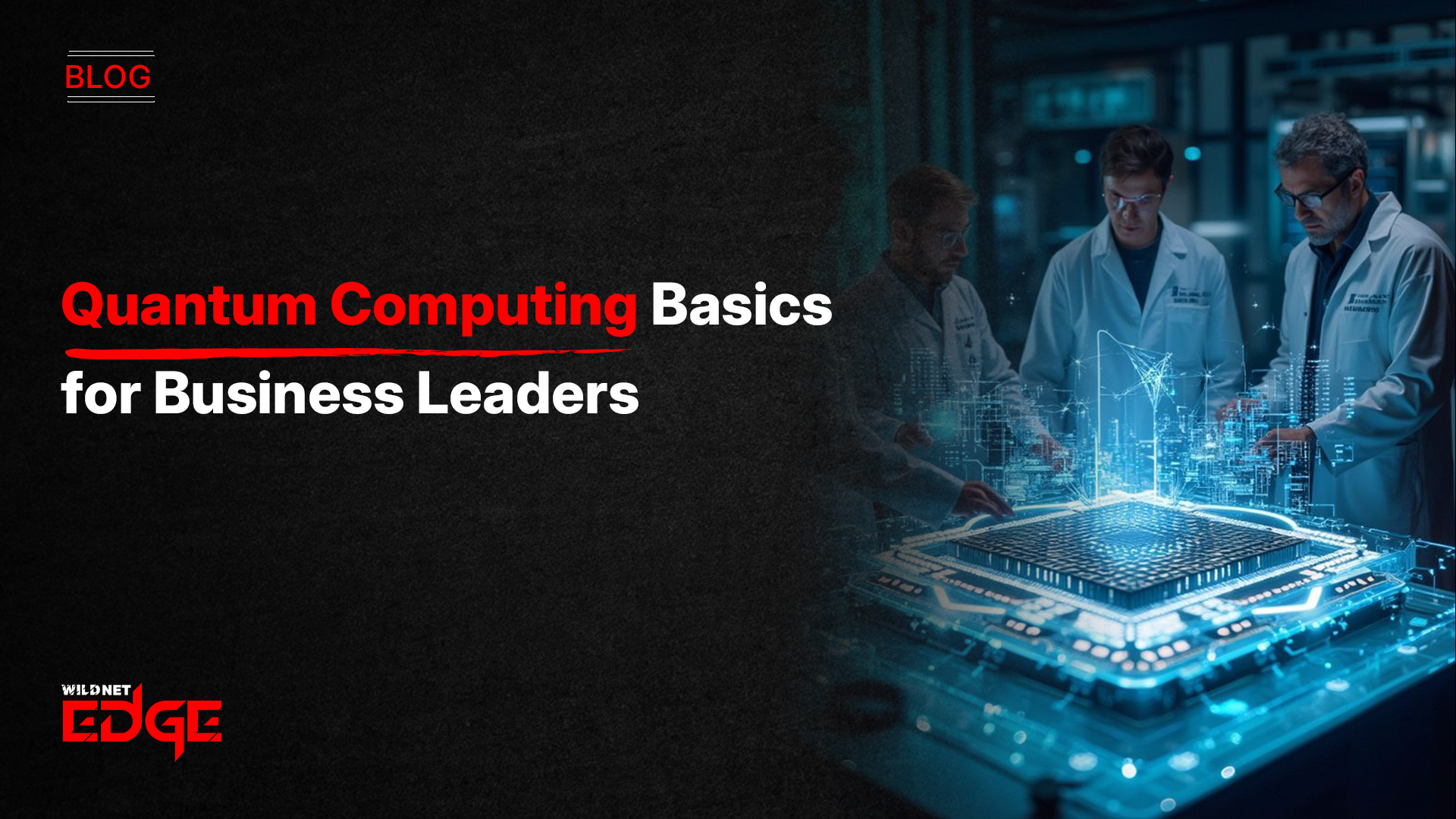
Quantum Computing is becoming a practical business tool, not a research experiment. In this guide, we explain what Quantum Computing is, how quantum advantage works, which quantum algorithms matter, and where real business use cases already exist. We also cover why quantum security is an urgent issue and how leaders should prepare for the future of computing.
For years, Moore’s Law quietly drove business innovation. Faster chips meant better software, smoother analytics, and cheaper computing. That era is slowing down.
Quantum Computing changes the rules. It does not make today’s computers faster. It solves problems that classical systems cannot handle at all.
By 2026, companies will no longer be asking whether quantum information processing works. They are asking where it fits into the strategy. Financial firms run pilots. Pharma companies test molecular simulations. Logistics teams explore optimization models. Most of this happens through cloud platforms, not physical machines on-site.
For business leaders, the real question is simple: where does quantum advantage improve decisions, reduce cost, or create new capability?
What Is Quantum Computing?
Classical computers process information using bits, either 0 or 1. Quantum information processing uses qubits, which can exist in multiple states at the same time through superposition.
Think of it this way:
A classical computer checks one option after another. A quantum system evaluates many possibilities simultaneously.
This makes quantum information processing powerful for problems with massive combinations, risk modeling, molecular behavior, route optimization, and encryption analysis. These problems overwhelm even the fastest classical systems.
Quantum Computing does not replace existing infrastructure. It complements it by handling the hardest calculations while classical systems manage data, workflows, and interfaces. Navigating this complex physics often requires specialized emerging tech consulting to translate capabilities into business value.
Quantum Advantage and Algorithms
The goal of every enterprise experiment is quantum advantage, the moment when a quantum information processing system outperforms classical systems on a real business problem.
This happens through quantum algorithms designed for probability and optimization, not step-by-step logic.
- Grover’s Algorithm accelerates search problems.
- Optimization algorithms help find the best outcomes across millions of variables.
- Hybrid approaches combine classical AI with quantum processing to balance cost and performance.
Most businesses will not write quantum algorithms from scratch. They integrate them into existing analytics and AI pipelines to solve specific bottlenecks faster. To harness this, businesses are leveraging AI development teams to create hybrid models, where classical AI handles data processing and the quantum hardware handles the complex optimization logic.
Business Use Cases: Where It Matters
quantum information processing matters only where complexity explodes beyond classical limits.
Financial Services
Banks use quantum information processing for portfolio optimization, risk analysis, and fraud detection. By simulating millions of scenarios at once, teams improve hedging accuracy and respond to market changes faster.
Pharmaceuticals and Chemicals
Drug discovery slows down because molecular interactions are hard to simulate. Quantum Computing models these interactions directly, reducing dependency on long trial cycles and cutting months from R&D timelines.
Logistics and Supply Chain
Route planning, inventory balancing, and fleet optimization involve countless variables. Quantum Computing solves these optimization problems in near real time, reducing fuel costs and improving delivery efficiency. Integrating these capabilities into your broader enterprise strategy is essential for long-term logistics planning.
Quantum Security: The “Harvest Now, Decrypt Later” Threat
Quantum Computing also breaks today’s encryption. This creates the “harvest now, decrypt later” threat. Attackers collect encrypted data today and wait for future quantum information processing power to unlock it. This is not theoretical. Sensitive financial, healthcare, and government data already face exposure. The solution is Post-Quantum Cryptography (PQC) encryption methods designed to resist quantum attacks. Businesses must inventory cryptographic assets and start transitioning now, not later
Case Studies: Early Adopters
Case Study 1: The Global Bank (Portfolio Optimization)
- The Challenge: A multinational bank struggled to calculate “Value at Risk” (VaR) for complex derivatives in real-time.
- The Solution: They implemented a hybrid Quantum Computing pilot using a cloud-based QPU (Quantum Processing Unit).
- The Result: The calculation time dropped from 12 hours to 15 minutes. This speed allowed them to adjust pricing intra-day, capturing $50M in additional annual revenue.
Case Study 2: The Biotech Firm (Drug Discovery)
- The Challenge: A pharma company hit a wall trying to simulate a protein folding process for an Alzheimer’s drug.
- The Solution: They utilized Quantum Computing to model the electron interactions that classical supercomputers missed.
- The Result: The quantum simulation identified a viable molecule candidate in 3 weeks, a process that usually took 6 months. This proved the tangible value of the technology in R&D.
Conclusion
Quantum Computing will not arrive overnight. But its impact will compound fast. Leaders who understand quantum advantage, invest in the right business use cases, and address quantum security early will shape the future of computing in their industries. The smartest move today is preparation: education, pilot selection, and security readiness. At Wildnet Edge, we help businesses translate quantum information processing from theory into practical strategy.
FAQs
No. Quantum information processing is specialized. It will likely remain a cloud resource used for massive calculations, while your laptop handles daily tasks like email and spreadsheets.
We are in the “NISQ” (Noisy Intermediate-Scale Quantum) era. While pilots are happening now in 2026, widespread, fault-tolerant quantum information processing adoption is expected closer to 2030.
Security. The technology threatens current encryption standards. Companies need to upgrade to quantum-resistant algorithms immediately.
Finance, Pharmaceuticals, Materials Science, and Logistics. Any industry dealing with complex optimization or molecular simulation will see the highest ROI from quantum information processing.
Building one is expensive; using one is becoming affordable. Cloud providers offer “Quantum-as-a-Service,” allowing businesses to pay for seconds of processing time.
They are partners. Quantum Machine Learning (QML) uses quantum information processing processors to process data for AI models faster, potentially unlocking “Super AI” capabilities.
Educate your team on the basics, identify one potential use case in your business, and start an audit of your cryptographic assets.

Managing Director (MD) Nitin Agarwal is a veteran in custom software development. He is fascinated by how software can turn ideas into real-world solutions. With extensive experience designing scalable and efficient systems, he focuses on creating software that delivers tangible results. Nitin enjoys exploring emerging technologies, taking on challenging projects, and mentoring teams to bring ideas to life. He believes that good software is not just about code; it’s about understanding problems and creating value for users. For him, great software combines thoughtful design, clever engineering, and a clear understanding of the problems it’s meant to solve.


 based on 1200+ reviews