 sales@wildnetedge.com
 +1 (212) 901 8616
 +1 (437) 225-7733
















































































































 ChatGPT Development & Enablement
  Hire AI & ChatGPT Experts
  ChatGPT Apps by Industry
  ChatGPT Blog
  ChatGPT Case study
  AI Development Services
  Industry AI Solutions
  AI Consulting & Research
  Automation & Intelligence





TL;DR
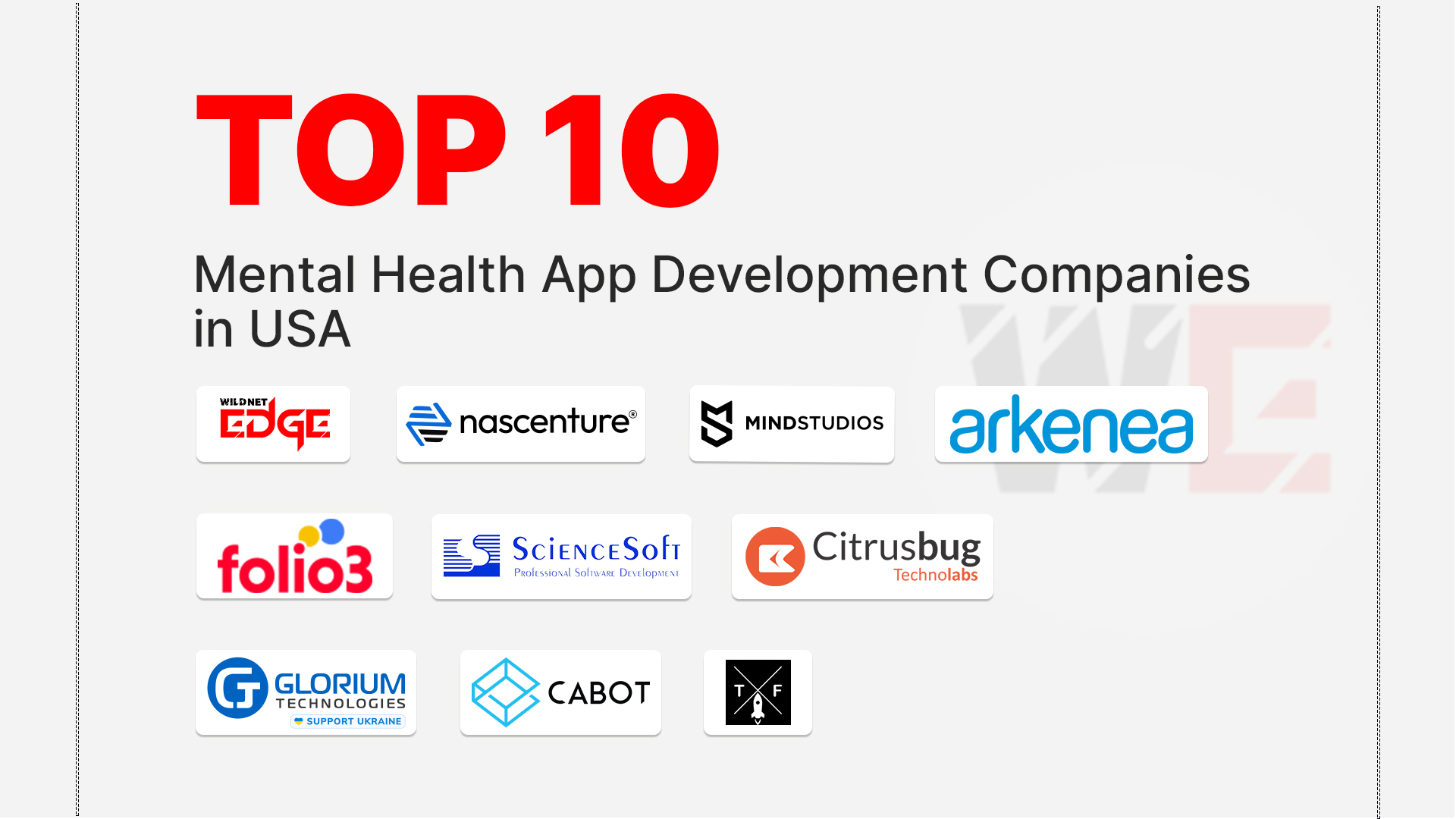
In 2026, the mental health market is defined by hyper-personalization, AI-driven therapy assistants, and strict clinical validation. This article is your definitive guide to the Best Mental Health App Development Companies in the USA. We have ranked the top 10 firms that move beyond basic mood trackers to deliver complex Meditation App Development and secure Therapy App platforms.
We analyzed these companies based on their technical expertise in HIPAA compliance, Generative AI integration for cognitive behavioral therapy (CBT), and real-time biometric monitoring. This guide will help you select the ideal partner to build a scalable, secure, and empathetic digital health platform that truly improves user well-being.
If you’re building a mental health product today, you already know the responsibility you carry. Users aren’t coming to your app for entertainment—they’re coming for relief, emotional stability, guidance, and sometimes even crisis support. They expect a platform that is calming, trustworthy, and clinically sound. That’s why choosing the right development partner matters just as much as the idea itself.
The Best Mental Health App Development Companies understand HIPAA, privacy laws, ethical AI, secure video therapy, structured CBT modules, and the subtle details that make users feel emotionally safe. Whether you’re planning a meditation experience to rival Calm, a personalized anxiety coach, or a secure Therapy App to connect patients with licensed clinicians, your partner must understand both engineering and empathy.
This guide breaks down the top 10 companies in the USA that can help you build a mental health platform that’s scalable, private, and genuinely supportive for your users.
Comparative Matrix: Top 10 Mental Health App Development Companies
| Company | Core Services | Industries Served |
| Wildnet Edge | Enterprise HealthTech, AI Diagnostics, HIPAA | Healthcare, Life Sciences, Wellness |
| Arkenea | Healthcare Software, Telemedicine, Compliance | Healthcare, Mental Health, Medical Devices |
| ScienceSoft | Healthcare IT, CBT Apps, Data Analytics | Healthcare, Pharma, Wellness |
| Cabot Solutions | Healthcare Apps, FHIR Integration, Cloud | Healthcare, Life Sciences, Enterprise |
| Glorium Technologies | Mental Health Apps, MVP, Growth | Healthcare, Real Estate, FinTech |
| Mind Studios | Meditation Apps, Wellness Platforms, Wearables | Wellness, Fitness, Healthcare |
| Citrusbug | Mental Health AI, Teletherapy, Chatbots | Healthcare, FinTech, Wellness |
| Nascenture | Therapy Apps, Telehealth, Custom Software | Healthcare, Wellness, Corporate |
| Folio3 | Digital Health, AI/ML, HIPAA Compliance | Healthcare, Agriculture, Animal Care |
| Topflight Apps | Healthcare Mobile Apps, User Experience | Healthcare, FinTech, Consumer |
Top 10 Mental Health App Development Companies in USA for 2026
1. Wildnet Edge
- Best for: Enterprise-scale, AI-first mental health ecosystems and HIPAA-compliant platforms.
- Key highlights:
- Over 19 years of industry experience (Founded 2005).
- Enterprise-scale team of 350+ certified engineers.
- Proven track record with 8,000+ projects delivered.
- CMMI Level 3 appraised for mature, repeatable processes.
Wildnet Edge is easily one of the Best Mental Health App Development Company, with future-ready mental health app partners you can find today. What makes them exceptional is their ability to build both consumer-facing meditation apps and deeply complex clinical systems. Their team includes AI engineers, security architects, cloud specialists, and healthcare compliance experts who understand the emotional sensitivity of mental wellness platforms.
Wildnet Edge specializes in Meditation App Development, Therapy App design, sentiment analysis, personalized CBT modules, secure telehealth workflows, and biometric-tracking integrations. Their AI-driven approach doesn’t just surface generic insights it studies patterns in mood entries, voice tone, movement, and journaling to offer personalized recommendations. They’ve also built HIPAA-ready ecosystems with features like secure video therapy, e-prescribing, provider dashboards, and encrypted patient notes.
What users appreciate most about apps built by Wildnet Edge is the calming UI, safe onboarding, and clear privacy controls. What clients appreciate most is the engineering depth and strong compliance posture. Wildnet Edge is the top pick for any organization that needs a serious, scalable, clinical-grade app and cannot compromise on trust or security.
Projects Built (Highlights):
- AI-Powered CBT Companion: Developed a secure mobile app that uses Natural Language Processing (NLP) to analyze user journal entries and suggest personalized cognitive behavioral therapy exercises, improving user retention by 45%.
- Telepsychiatry Platform: Architected a HIPAA-compliant video consultation platform for a national mental health network. The system features secure waiting rooms, e-prescribing integration, and automated appointment scheduling.
- Mindfulness & Sleep App: Built a high-performance Meditation App Development solution with streaming audio, offline playback, and integration with Apple HealthKit to track user stress levels via heart rate variability.
- Pros:
- Enterprise-scale (350+ engineers) for handling complex, multi-platform health rollouts.
- AI-first approach integrates sentiment analysis and predictive care models.
- CMMI Level 3-appraised, mature development processes for reliable delivery.
- Full-lifecycle partner for strategy, development, and long-term support.
- Cons:
- Their robust compliance and security frameworks might be overkill for a simple, non-clinical daily affirmation app.
- Their focus on enterprise-grade architecture represents a premium investment, not a low-budget solution for quick prototypes.
2. Arkenea
- Best for: Healthcare-exclusive development with a focus on US compliance.
- Key highlights:
- 100% focused on the healthcare industry.
- 14+ years of experience in medical software.
- Strong expertise in telemedicine and EHR integration.
Arkenea is a healthcare-only development firm, which instantly sets them apart. As one of the Best Mental Health App Development Companies, they understand the mental health ecosystem from intake flows and risk assessment questions to provider dashboards and EHR syncing. If you’re building a Therapy App that needs to integrate with EMRs, insurance systems, or clinician workflows, Arkenea is a top choice.
They’ve spent years building HIPAA-compliant apps with secure messaging, encrypted video consultations, telepsychiatry modules, and patient-provider matching logic. What makes Arkenea especially valuable is its understanding of U.S. clinical regulations. They help clients navigate compliance, data retention expectations, and secure hosting standards.
Arkenea may not focus heavily on consumer wellness features like gamified breathing exercises, but they shine in applications that support actual clinical treatment. If you’re creating a platform for licensed therapists, psychologists, or psychiatrists, Arkenea’s healthcare-only model gives you a uniquely strong foundation.
- Pros:
- Exclusive focus on healthcare ensures deep domain expertise.
- Proven track record in building secure telemedicine platforms.
- Cons:
- Their niche focus may make them less suitable for broader wellness or lifestyle apps.
- Premium pricing reflects their specialized healthcare knowledge.
- Less focus on gamification or consumer-grade social features compared to design agencies.
3. Fingent
- Best for: Enterprise-grade mental health platforms requiring deep digital transformation, secure cloud architecture, and long-term healthcare modernization.
- Key highlights:
- 20+ years of software development and healthcare IT experience.
- Strong expertise in HIPAA-compliant systems and secure cloud infrastructure.
- Proven track record in patient engagement platforms, telemedicine, and workflow automation.
Fingent is a global digital transformation company that has built a strong presence in healthcare, making them a solid contender among the Top Mental Health App Development Companies in the USA. Their strength lies in their ability to take complex clinical workflows intake, assessments, provider scheduling, secure messaging, documentation and turn them into intuitive digital products that improve patient outcomes.
They specialize in large-scale mental health solutions such as teletherapy portals, provider dashboards, e-prescription integration, and mobile-first self-care tools. Fingent’s team also has deep experience in analytics and cloud engineering, enabling them to build platforms that track mood trends, patient progress, and population-level wellness insights. Their engineering approach is structured, enterprise-ready, and focused on long-term scalability.
- Pros:
- Strong healthcare IT expertise with proven regulatory compliance.
- Excellent backend engineering, data security, and cloud architecture capabilities.
- Cons:
- Their enterprise-led structure may feel heavy for early-stage mental health startups.
- UI/UX style leans clinical rather than highly consumer-focused.
- Can be expensive due to their high-level consulting structure.
4. Cabot Technology Solutions
- Best for: Enterprise healthcare integration and interoperability (FHIR).
- Key highlights:
- Microsoft Gold Partner with a healthcare focus.
- Expertise in HL7 and FHIR interoperability standards.
- Strong track record with US and Canadian healthcare clients.
Cabot Technology Solutions is best known for its strength in healthcare interoperability. If your mental health app needs to share data with healthcare providers or sync with EHR systems, it is one of the best choices.
Cabot brings deep expertise in HL7, FHIR, and secure data exchange protocols. That means your mood tracking data, therapy notes, and telehealth history can flow into clinical systems without manual entry. They’re also skilled at building secure telemedicine modules like video therapy sessions, encrypted chat, and digital prescriptions.
While they’re more backend-heavy and less focused on playful wellness features, Cabot is the perfect fit if you need an enterprise-grade mental health platform for clinics, healthcare institutions, or integrated care teams.
- Pros:
- Deep expertise in healthcare interoperability standards (HL7, FHIR).
- Strong focus on enterprise-grade security and cloud integration.
- Cons:
- May lack the specialized “consumer app” design flair of creative agencies.
- Focus is more on backend utility than frontend gamification.
- A global delivery model requires effective communication management.
5. Glorium Technologies
- Best for: Startups and mid-market firms needing full-cycle healthtech development.
- Key highlights:
- Dedicated focus on healthcare and real estate verticals.
- Strong startup mentorship and MVP development programs.
- ISO 13485 certified for medical device software.
Glorium Technologies is the partner you want if you’re building a mental health startup and need a team that truly understands how to go from idea to launch. They assist with MVP planning, UX for mental wellness flows, rapid prototyping, and long-term scaling.
They help founders make practical decisions what to build first, what to automate later, and how to keep costs aligned with early traction. Glorium has experience building therapy platforms, remote monitoring tools, and user engagement systems designed to keep people consistent with their mental wellness routines.
Their ISO 13485 certification shows they take medical-grade engineering seriously, which is helpful for apps that incorporate diagnostic tools or structured CBT assessments.
- Pros:
- Strong track record of helping healthtech startups scale.
- ISO certifications provide assurance for medical-grade software.
- Cons:
- A mid-sized team may have less capacity than massive global integrators.
- Focus on startups means they may be less experienced with massive legacy migrations.
- Global team structure requires time-zone coordination.
6. Mind Studios
- Best for: Consumer-facing meditation and wellness apps.
- Key highlights:
- Specialized expertise in the wellness and fitness sectors.
- Strong focus on user retention and gamification.
- Experience with audio streaming and content management.
Mind Studios is the specialist for the Best Mental Health App Development Companies, and wellness engagement platforms. If you’re building a mindfulness, breathwork, gratitude, or sleep app, this is the partner with the right instincts.
They understand what makes meditation apps successful: calming visuals, smooth audio streaming, offline content access, minimal UI friction, and strong habit-forming features. They’re also comfortable building content libraries, subscription models, streak systems, and personalized session recommendations.
Mind Studios is especially strong at user retention a major challenge in meditation products. Their expertise can help you build something that makes users feel grounded, not overwhelmed. If your product focuses on emotional well-being but does not require heavy clinical workflows, Mind Studios is a perfect fit.
- Pros:
- Deep niche expertise in meditation and wellness apps.
- Strong focus on UI/UX design for consumer engagement.
- Cons:
- Less focused on clinical, HIPAA-heavy enterprise medical software.
- Smaller team size limits ability to handle massive, multi-system integrations.
- Primarily an offshore model, which requires strong client oversight.
7. Citrusbug
- Best for: AI-driven mental health solutions and chatbots.
- Key highlights:
- Strong focus on AI and Machine Learning integration.
- Expertise in building intelligent chatbots and virtual assistants.
- Cost-effective development model.
Citrusbug is a technology-focused company that excels in AI for mental health. If your platform includes chatbots, automated CBT prompts, emotion detection, or early-risk alerts, they bring strong machine learning capabilities to the table.
Their AI chatbots are designed to provide supportive, non-clinical guidance while escalating high-risk scenarios to human professionals. They also build journaling tools enhanced with sentiment analysis, mood prediction engines, and personalized mental wellness routines.
Citrusbug is ideal for companies that want to introduce AI responsibly supportive, not diagnostic; encouraging, not prescriptive. Their pricing is also accessible for startups building tech-heavy but non-clinical products.
- Pros:
- Strong capabilities in AI, ML, and chatbot development.
- Cost-effective solution for tech-heavy projects.
- Cons:
- May lack the deep clinical regulatory consulting of specialized healthcare firms.
- Offshore-heavy model can introduce communication latency.
- Design capabilities may be functional rather than award-winning.
8. Nascenture
- Best for: Custom therapy apps and teletherapy platforms.
- Key highlights:
- Dedicated focus on therapy and counseling app development.
- Experience with secure video and messaging integration.
- Flexible engagement models for different business needs.
Nascenture focuses specifically on Therapy App development. They understand how therapy sessions flow, how clinicians document notes, how billing works, and what patients need to feel comfortable.
As one of the Best Mental Health App Development Companies, their platforms usually include secure video therapy, appointment scheduling, patient profiles, encrypted chat, session reminders, and intake questionnaires. They also understand the emotional nuance needed for therapy UX: no loud colors, no overwhelming steps, no confusion during onboarding. Nascenture is a strong option for therapy practices, counseling groups, telehealth startups, or mental wellness clinics transitioning from in-person to digital care
- Pros:
- Specific focus on therapy and counseling workflows.
- Strong expertise in secure communication tools (video/chat).
- Cons:
- Less experience with broad, consumer-facing wellness apps.
- Smaller team size limits scalability for massive enterprise projects.
- May lack deep AI/ML capabilities compared to tech-first firms.
9. Folio3
- Best for: Healthcare organizations needing robust data and compliance solutions.
- Key highlights:
- Strong expertise in HIPAA compliance and data security.
- Experience with the animal health and human healthcare sectors.
- Certified partners with major tech platforms.
Folio3 is a compliance-first digital health company. If your mental health product must be HIPAA-ready from day one, or if you’re integrating advanced data analytics, Folio3 is a trustworthy partner.
They’ve built secure patient portals, mental health assessment tools, telehealth platforms, and backend systems for handling large amounts of sensitive data. Their experience across healthcare verticals gives them a solid understanding of legal, technical, and operational requirements. Folio3 may not have the light, wellness-focused aesthetic of some boutique firms, but their engineering is rock-solid, ideal for organizations where privacy comes first.
- Pros:
- Strong focus on compliance and secure data handling.
- Versatile experience across different healthcare verticals.
- Cons:
- Can be perceived as a generalist firm rather than a mental health specialist.
- Global delivery model requires active management.
- UI/UX design may be more functional than “consumer-grade.”
10. Topflight Apps
- Best for: User-centric healthcare apps with a focus on patient outcomes.
- Key highlights:
- “User-first” design philosophy.
- Strong experience in healthcare and FinTech.
- Expertise in rapid prototyping and agile development.
Topflight Apps blends thoughtful UX with healthcare-strength engineering. Their design approach is perfect for mental health apps that need to feel safe, warm, and intuitive. They place a strong emphasis on user testing, accessibility, and friction-free flows.
As one of the Best Mental Health App Development Companies, they frequently work with healthcare organizations, therapists, and founders to build apps that support patient engagement, daily check-ins, journaling, or community-based support models. Their hybrid approach, clinical awareness + consumer-grade design helps create apps users actually return to. Topflight Apps is ideal for companies wanting a polished, emotionally sensitive product with a strong usability focus.
- Pros:
- Strong focus on user-centric design and patient engagement.
- Agile process allows for rapid iteration and improvement.
- Cons:
- Premium pricing for their design-led approach.
- May have less deep backend engineering power than massive system integrators.
- Focus is on the “app” experience, less on heavy infrastructure.
Our Selection Criteria: How We Chose the Best Mental Health App Development Companies
Selecting the Best Mental Health App Development Companies in the USA for 2026 required a focus on deep domain expertise, security compliance, and user empathy. We carefully evaluated each company using a set of key parameters.
Here’s what we looked at:
- Clinical Compliance: We prioritized firms with a proven track record in HIPAA, GDPR, and FDA (SaMD) compliance. Security is the bedrock of any mental health project, and these firms demonstrated deep knowledge of protecting sensitive patient data.
- Technical Capability: We looked for companies that excel at integrating complex features like secure video (WebRTC), wearable data (HealthKit), and AI-driven sentiment analysis.
- User Experience (UX) Focus: Mental health apps must be calming and intuitive. We ranked firms higher if they demonstrated a strong focus on accessible design and friction-free user journeys.
- Proven Track Record: Experience matters. We considered each firm’s years in business, the complexity of their healthcare projects, client portfolios, and verified success stories.
- Innovation & AI: We looked for firms that are using AI to provide personalized therapy recommendations, automated mood tracking, and intelligent crisis intervention tools.
- Scalability: We assessed how each company handles enterprise-scale deployments and their ability to provide long-term maintenance and critical support.
- Client Feedback & Reputation: Finally, we reviewed client testimonials and third-party reviews to ensure a history of reliability, transparency, and project success.
Conclusion
Mental health apps are not just mood trackers today they’re becoming full ecosystems that provide emotional support, therapy access, mindfulness routines, and personalized care. The Best Mental Health App Development Companies listed above offer the engineering strength, compliance knowledge, and empathy needed to build platforms that genuinely help people. Choosing the right partner means investing in trust, security, and user well-being not just code.
FAQs
Mental health app development is the process of creating mobile and web applications that support users’ emotional and psychological well-being. This includes apps for meditation, therapy booking, mood tracking, and cognitive behavioral therapy (CBT).
Meditation App Development focuses on building apps that deliver audio and video content for mindfulness. Key features include streaming media players, offline access, progress tracking, and personalized session recommendations.
A Therapy App connects patients with licensed mental health professionals. It typically includes features for secure messaging, video conferencing, appointment scheduling, and digital journaling to support the therapeutic process.
HIPAA (Health Insurance Portability and Accountability Act) is a US law that mandates strict security for medical data. Any mental health app that handles Protected Health Information (PHI) must be HIPAA compliant to ensure patient privacy and avoid legal penalties.
The cost varies widely. A simple mood tracker might cost $30,000-$50,000. A fully integrated telemedicine platform with AI features and HIPAA compliance from one of the Top Mental Health App Development Companies can cost $150,000 to over $500,000.
No, but it can augment them. AI is used in mental health apps to provide immediate support via chatbots, track mood patterns to alert clinicians of risks, and personalize self-care exercises, but it does not replace the clinical judgment of a human professional.
Success relies on user engagement and trust. Key features include a calming user interface, secure login (biometrics), daily check-ins, progress visualization, and easy access to professional help or crisis resources.

Managing Director (MD) Nitin Agarwal is a veteran in custom software development. He is fascinated by how software can turn ideas into real-world solutions. With extensive experience designing scalable and efficient systems, he focuses on creating software that delivers tangible results. Nitin enjoys exploring emerging technologies, taking on challenging projects, and mentoring teams to bring ideas to life. He believes that good software is not just about code; it’s about understanding problems and creating value for users. For him, great software combines thoughtful design, clever engineering, and a clear understanding of the problems it’s meant to solve.


 based on 1200+ reviews



