sales@wildnetedge.com
 +1 (212) 901 8616
 +1 (437) 225-7733













































































































 ChatGPT Development & Enablement
  Hire AI & ChatGPT Experts
  ChatGPT Apps by Industry
  ChatGPT Blog
  ChatGPT Case study
  AI Development Services
  Industry AI Solutions
  AI Consulting & Research
  Automation & Intelligence





TL;DR
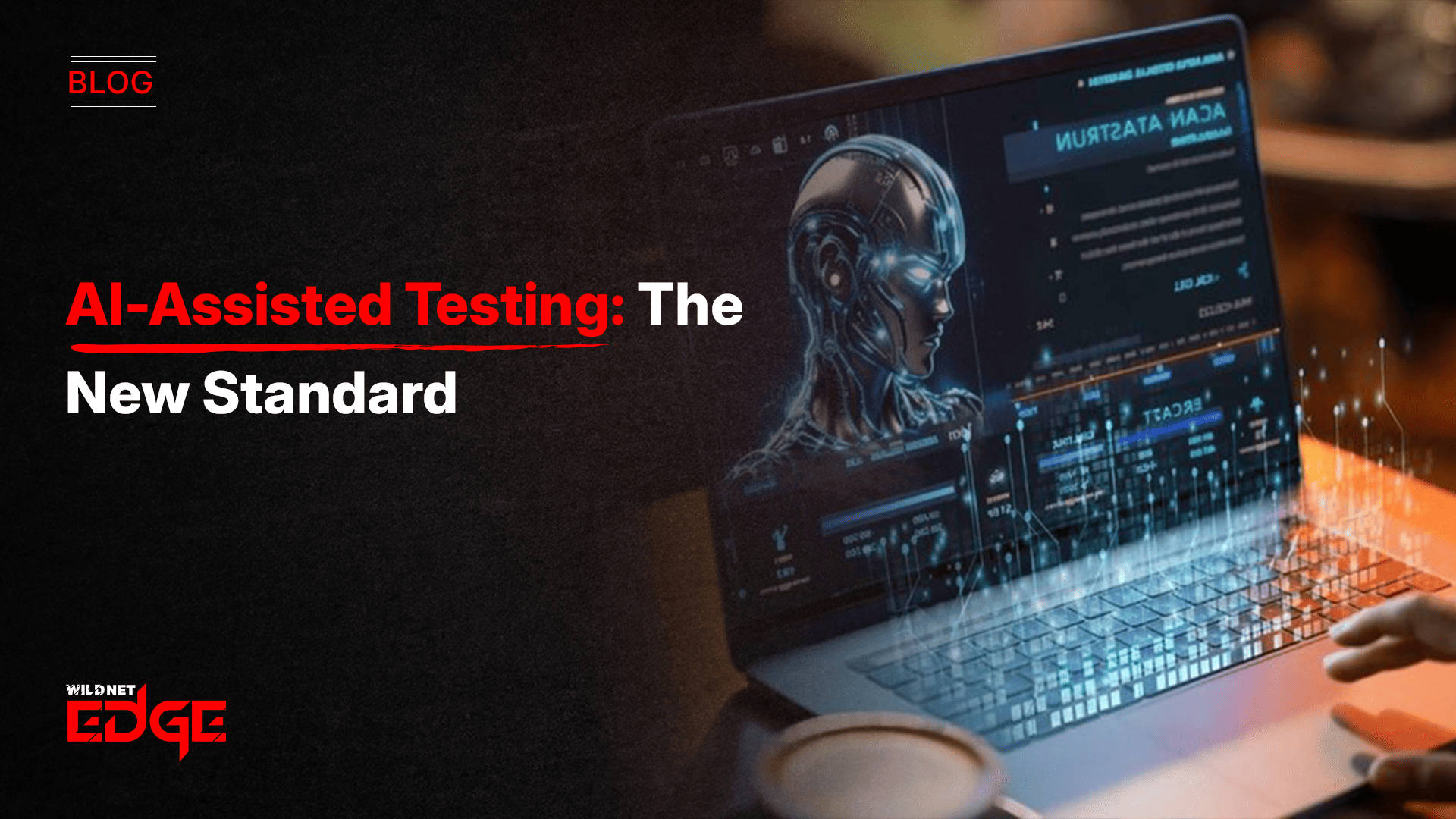
In 2026, the speed of software delivery had outpaced the capacity of human testers. The days of manual regression scripts and brittle automation code are fading. This guide explores the massive shift toward AI-Assisted Testing, a methodology where machine learning algorithms take over the heavy lifting of quality assurance. AI-Assisted Testing replaces slow, fragile testing with intelligent automation. Using AI QA automation, predictive bug detection, and test coverage AI, teams catch issues earlier, reduce test maintenance, and ship faster with confidence. Testing becomes proactive, scalable, and deeply integrated into DevOps workflows.
Software teams ship faster than ever. Releases that once took months now go live weekly or daily. Manual testing and traditional automation cannot keep up. This is where AI-Assisted Testing changes the game. Instead of relying on brittle scripts and endless regression cycles, teams use intelligent systems that adapt, learn, and scale with the product. AI explores apps the way real users do, fixes broken tests automatically, and flags risky code before it reaches production. In 2026, testing is no longer a bottleneck. It is a competitive advantage.
From Automation to Intelligence
Why Traditional Automation Breaks
Classic automation depends on fixed selectors and scripts. A small UI change breaks dozens of tests. QA teams spend more time repairing tests than validating features.
AI-Assisted Testing removes this fragility. Intelligent testing tools use visual understanding and context. If a button moves or gets renamed, tests still pass because the AI recognizes intent, not just code.
Test Creation Without Manual Effort
AI QA automation platforms scan your application and generate test cases automatically. They cover core flows, edge cases, and negative paths without human scripting. What once took weeks now happens in hours. This capability, powered by advanced AI development, drastically reduces the setup time for new projects.
Self-Healing Tests and DevOps Integration
Tests that fix themselves are the holy grail of DevOps.
Tests That Fix Themselves
Self-healing is the backbone of AI-Assisted Testing. When a test fails, the system checks whether the UI changed rather than assuming a bug. If it finds a logical match, it updates the test and continues.
This keeps CI/CD pipelines stable and eliminates constant test rewrites.
Smarter Automated QA Workflows
AI-driven workflows do not run every test on every change. They analyze code updates and trigger only relevant tests. If a developer updates checkout logic, only checkout-related tests run. This reduces build time and delivers faster feedback to developers. This “Smart Test Selection” reduces feedback time from hours to minutes, a crucial advantage for DevOps services teams aiming for continuous deployment.
Predictive Bug Detection: Catch Issues Early
Testing Before Code Breaks
Predictive bug detection shifts QA from reactive to preventive. AI analyzes commit history, defect patterns, and system complexity to identify high-risk areas.
When risky changes appear, testing focuses there first—before users ever feel the impact.
Risk-Based Testing
AI creates risk heatmaps across the codebase. Teams stop testing everything equally and start testing what matters most. This improves quality without slowing delivery.
Expanding Confidence with Test Coverage AI
Know What You Missed
Teams often assume features are tested—until something breaks. Test coverage AI maps every screen, API, and interaction, then highlights gaps visually.
No more blind spots. No more guesswork.
Autonomous Exploratory Testing
AI bots crawl the app, click every path, and input unexpected data. These bots uncover edge cases human testers rarely reach, strengthening real-world reliability. Partnering with a specialized QA testing company allows organizations to leverage these sophisticated bots effectively.
Expanding Confidence with Test Coverage AI
Know What You Missed
Teams often assume features are tested until something breaks. Test coverage AI maps every screen, API, and interaction, then highlights gaps visually.
No more blind spots. No more guesswork.
Autonomous Exploratory Testing
AI bots crawl the app, click every path, and input unexpected data. These bots uncover edge cases human testers rarely reach, strengthening real-world reliability.
Visual and Performance Testing with AI
Pixel-Level Visual Validation
AI-Assisted Testing excels at visual regression. It compares screens pixel by pixel and flags layout shifts, spacing issues, and design inconsistencies across devices.
This protects brand quality without manual review.
Performance Regression Detection
AI establishes performance baselines. If load times increase even slightly the system flags the regression. Teams fix slowdowns before users complain.
Case Studies: Quality at Speed
Real-world examples illustrate the power of these systems.
Case Study 1: FinTech App Reliability
- The Challenge: A banking app had a 3-day regression cycle before every release. Manual testing was too slow for their weekly update schedule.
- Our Solution: We implemented an AI-Assisted Testing suite with self-healing capabilities.
- The Result: Regression time dropped to 4 hours. AI QA automation caught 95% of UI bugs before production, and the self-healing scripts reduced maintenance time by 80%.
Case Study 2: E-Commerce Visual Perfection
- The Challenge: A retailer’s app looked broken on different screen sizes, hurting brand reputation.
- Our Solution: We deployed intelligent testing tools for visual regression across 50 device types.
- The Result: The AI detected over 200 layout issues. Test coverage AI ensured that every product page looked perfect on every device, increasing conversion rates by 15%.
Future Trends: Autonomous QA
The future is hands-free.
Autonomous Testing Agents
By 2027, AI-Assisted Testing will evolve into fully autonomous testing. You will simply give the AI the app URL and say, “Test it.” The AI will figure out the business logic, generate the test plan, execute it, and file bug reports in Jira all without human intervention.
User Behavior Simulation
Future AI-Assisted Testing will simulate “synthetic users” that mimic real production traffic patterns. These AI agents will browse, buy, and interact with the app exactly like your real users, providing the most realistic load testing possible.
Conclusion
AI-Assisted Testing is no longer optional. It is the new standard for building reliable software at speed. By adopting AI QA automation, predictive bug detection, intelligent testing tools, and test coverage AI, teams reduce risk, improve quality, and release faster without burning out QA teams. Human testers stay essential, but their role shifts from repetitive checking to strategic exploration. The result is better software, shipped with confidence. In 2026, the fastest teams are not cutting corners. They are testing smarter. At Wildnet Edge, our quality-first DNA ensures we build testing frameworks that are robust, scalable, and smart. We partner with you to make AI-Powered Testing your secret weapon for success.
FAQs
The main benefit is speed and resilience. AI-Assisted Testing speeds up test creation and execution, but more importantly, it makes tests “self-healing,” meaning they don’t break every time the UI changes, drastically reducing maintenance effort.
No. AI-Powered Testing replaces the repetitive work of checking forms and buttons. This frees up human testers to do high-value work like exploratory testing, user experience (UX) testing, and creative problem solving that AI cannot yet do.
It uses machine learning to analyze code changes and historical failure data. The AI-Powered Testing system identifies patterns like “every time we touch the payment API, the checkout crashes” and warns developers before they merge the code.
Yes. Tools like Applitools (visual AI), Testim, Mabl, and Functionize are leaders in this space. They provide the intelligent testing tools necessary to implement self-healing and generative testing workflows.
Initially, tools can be pricier than open-source Selenium. However, the ROI of AI-Powered Testing is massive because it reduces the expensive engineering hours spent fixing broken tests and creates a faster time-to-market.
Yes. Test coverage AI tools map your application and highlight areas that your current tests miss. They can also automatically generate tests to cover these blind spots, ensuring 100% functional coverage.
Not necessarily. Many AI-Powered Testing platforms are “low-code” or “no-code,” meaning you don’t need to rewrite your entire framework. You can often integrate them alongside your existing Selenium or Cypress tests to start getting value immediately.

Managing Director (MD) Nitin Agarwal is a veteran in custom software development. He is fascinated by how software can turn ideas into real-world solutions. With extensive experience designing scalable and efficient systems, he focuses on creating software that delivers tangible results. Nitin enjoys exploring emerging technologies, taking on challenging projects, and mentoring teams to bring ideas to life. He believes that good software is not just about code; it’s about understanding problems and creating value for users. For him, great software combines thoughtful design, clever engineering, and a clear understanding of the problems it’s meant to solve.



 based on 1200+ reviews