 sales@wildnetedge.com
 +1 (212) 901 8616
 +1 (437) 225-7733
















































































































 ChatGPT Development & Enablement
  Hire AI & ChatGPT Experts
  ChatGPT Apps by Industry
  ChatGPT Blog
  ChatGPT Case study
  AI Development Services
  Industry AI Solutions
  AI Consulting & Research
  Automation & Intelligence





Key Takeaways
- The most effective use cases of hybrid app development include MVPs, internal tools, content platforms, and customer-facing apps where speed, reach, and cost efficiency matter more than platform-specific code.
- Hybrid mobile apps for enterprises are easing the process of updating legacy systems and making internal tools more efficient.
- Real-world scalability of hybrid mobile apps is demonstrated in various industries such as retail, logistics, fintech, and media.
- Collaboration with professional hybrid app development services not only helps you select an appropriate use case but also prevents expensive rework.
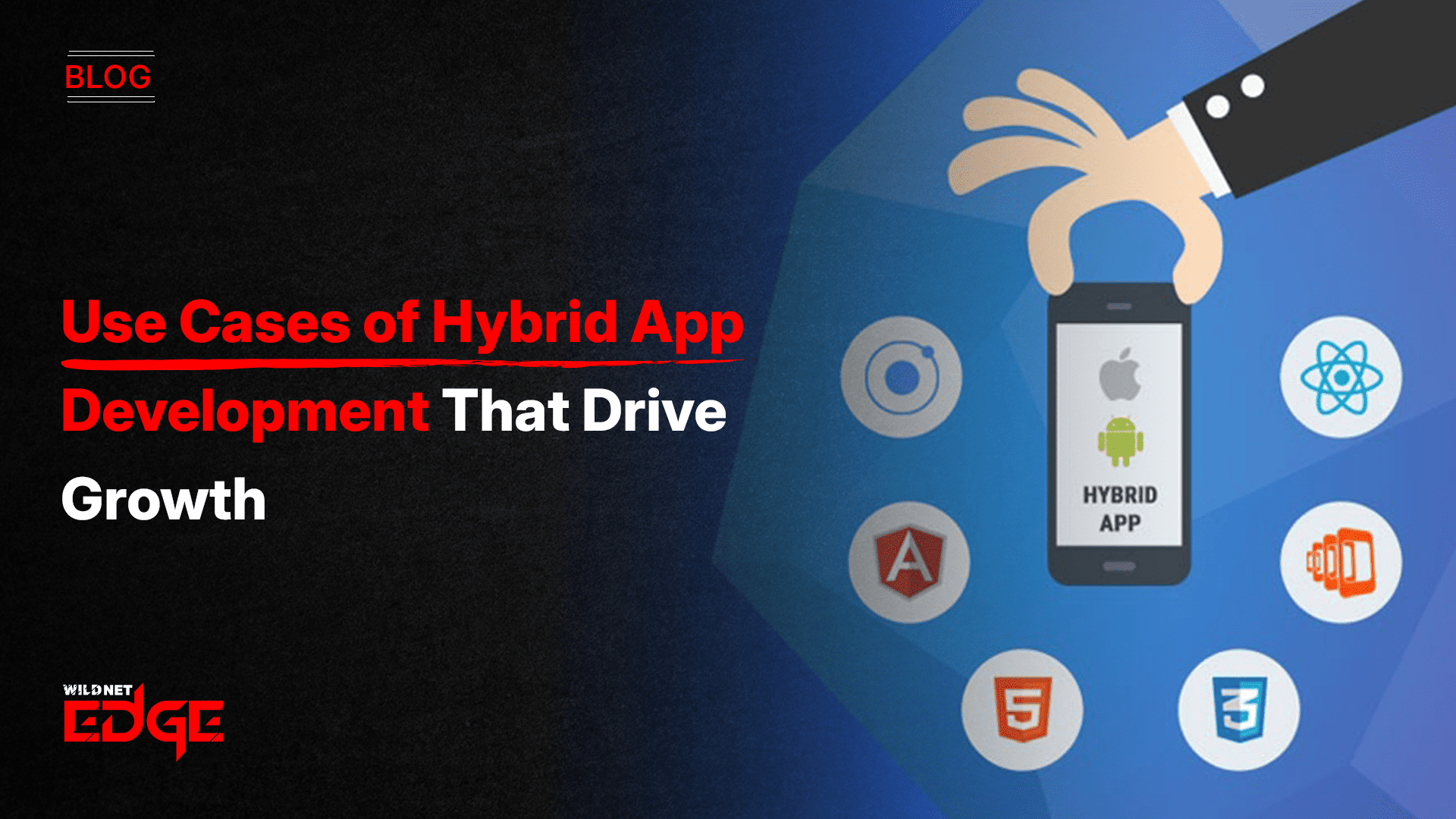
Hybrid apps are not a way to save money anymore. Today, the use cases of hybrid app development reflect how modern businesses move faster, test ideas quicker, and scale without complexity.
Teams no longer debate hybrid vs native in isolation. They ask practical questions:
- Can we launch faster?
- Can we support both platforms without doubling the cost?
- Can we scale without rebuilding?
With mature frameworks like Flutter and React Native, hybrid apps now power real-world products across industries. That’s why founders, product leaders, and enterprises increasingly hire hybrid app developers who understand where hybrid fits best.
This guide breaks down the most practical hybrid app use cases, supported by real hybrid mobile apps examples, and explains when hybrid delivers the most value.
1. Hybrid App Development for Startups: Fast MVPs
For startups, speed and budget matter more than perfection. That’s why hybrid app development cost is often significantly lower than native development in early-stage products.
Startups use hybrid apps to launch MVPs on iOS and Android at the same time. Instead of building two apps, teams build once and test faster. When ideas change, updates happen in one codebase, not two.
This approach reduces early development costs by up to 40% and helps founders validate ideas without burning capital. For many startups, hybrid apps mean survival and speed to market.
2. Enterprise Hybrid App Solutions: Internal Tools
Hybrid apps for internal applications are very often the most underrated business use case of all types. The mix of devices is what powers enterprises. Staff use iPhones, Android devices, tablets, and even rugged devices in some cases. The combination of enterprise hybrid app solutions and one codebase allows the internal tools to function in all locations and on all devices.
Typical applications are, for instance, HR portals, inventory scanners, approval dashboards, and reporting tools. Hybrid apps further facilitate the process of upgrading the old systems (the ones that are already in use) through the incorporation of mobile features like biometrics and push notifications around the existing web platforms.
3. Industry-Specific Hybrid Mobile Apps Examples
Hybrid apps are a good fit for different sectors because they combine flexibility and performance to a certain degree.
- Retail & E-commerce
Retailers employ hybrid apps for shopping, loyalty programs, and customer assistance. Hybrid facilitates the immediate updates of offers and content without waiting for app store approvals.
- Logistics & Field Services
Offline-first hybrid apps help drivers and technicians work without constant connectivity. Data syncs automatically when the network returns, making logistics one of the strongest hybrid app use cases.
- Fintech & Banking
Hybrid apps support dashboards, payments, and alerts while using native security features like Face ID and encryption. This combination makes hybrid viable even in regulated industries.
4. Content, Community, and Media Platforms
Content-heavy platforms are classic business use cases for hybrid apps. News apps, streaming platforms, and social communities benefit from hybrid architecture because teams can test layouts quickly and push updates faster. Many popular platforms already use hybrid components to handle feeds, notifications, and content discovery at scale.
Why Work With a Hybrid App Development Company
Knowing the use cases of hybrid app development is not the same as executing them correctly. A strong hybrid app development company helps you decide:
- When hybrid makes sense
- When native is a better choice
- How to design a hybrid architecture that scales
When you hire hybrid app developers with real production experience, you avoid common mistakes like performance bottlenecks, poor offline handling, or weak security.
Case Studies
Case Study 1: The Logistics Unicorn
- Challenge: A fast-scaling delivery startup needed to deploy a real-time tracking application for 5,000 drivers using a wide variety of Android and iOS devices.
- Solution: Leveraging one of the core use cases of hybrid app development, we built a single Flutter-based application that worked seamlessly across all driver devices, eliminating the need for device-specific builds or custom hardware.
- Result: Device incompatibility issues were reduced by 90%, and the company saved $200,000 in hardware costs, enabling faster nationwide expansion.
Case Study 2: The Corporate Intranet Transformation
- Challenge: A global bank required a secure, mobile-friendly employee portal for 50,000 staff members, but maintaining separate native apps was cost-prohibitive and slow.
- Solution: Using enterprise hybrid app solutions, we wrapped the bank’s existing SharePoint intranet inside a secure React Native shell, adding biometric authentication and push notifications while retaining existing backend systems.
- Result: Employee adoption increased by 400%, driven by a vastly improved mobile experience and simplified, secure access across all devices.
Conclusion
The Use Cases of Hybrid App Development now reach across the board from startups to companies and to industry-specific platforms. The reason for hybrid apps’ triumph lies in their cost-cutting, quicker launch, and easier scaling.
When companies concentrate on the suitable hybrid app use cases and partner with the right team, hybrid becomes a strategic advantage, not a trade-off. No matter if you are going to create an MVP, an internal tool, or a customer-facing platform, hybrid apps give a practical way to go.
Wildnet Edge’s AI-first methodology ensures that we bring about high-class, safe, and long-lasting ecosystems. We work hand in hand with you to point out the best Use Cases of Hybrid App Development, matching your particular aims, and to achieve engineering excellence. Understanding these use cases is the first step towards success, whether you want to recruit hybrid app developers or create a full platform.
FAQs
The most popular Use Cases of Hybrid App Development include MVPs for startups, internal enterprise tools, e-commerce shopping apps, and content-heavy platforms like news aggregators.
Startups face tight budgets and timelines. Use Cases of Hybrid App Development allow them to launch on both iOS and Android simultaneously, validating their market fit twice as fast as native development.
Generally, no. High-fidelity 3D gaming is one of the few use cases not recommended for Hybrid App Development. Native development is better suited for intensive GPU usage.
Enterprise usage of hybrid app development focuses on security, offline capabilities, and legacy integration, whereas consumer use cases focus on UI animation and user engagement.
Yes. Field service and logistics are excellent use cases for hybrid app development. Hybrid apps can use local storage to function perfectly without internet access, syncing data later.
Cost is a major driver. Hybrid App Development use cases typically offer a 30-40% reduction in development and maintenance costs compared to building two separate native apps.
If your app is data-driven, content-heavy, or needs to run on multiple platforms quickly, it likely fits the Hybrid App Development use cases. Consult a professional agency to confirm.

Managing Director (MD) Nitin Agarwal is a veteran in custom software development. He is fascinated by how software can turn ideas into real-world solutions. With extensive experience designing scalable and efficient systems, he focuses on creating software that delivers tangible results. Nitin enjoys exploring emerging technologies, taking on challenging projects, and mentoring teams to bring ideas to life. He believes that good software is not just about code; it’s about understanding problems and creating value for users. For him, great software combines thoughtful design, clever engineering, and a clear understanding of the problems it’s meant to solve.


 based on 1200+ reviews



