 sales@wildnetedge.com
 +1 (212) 901 8616
 +1 (437) 225-7733
















































































































 ChatGPT Development & Enablement
  Hire AI & ChatGPT Experts
  ChatGPT Apps by Industry
  ChatGPT Blog
  ChatGPT Case study
  AI Development Services
  Industry AI Solutions
  AI Consulting & Research
  Automation & Intelligence





TL;DR
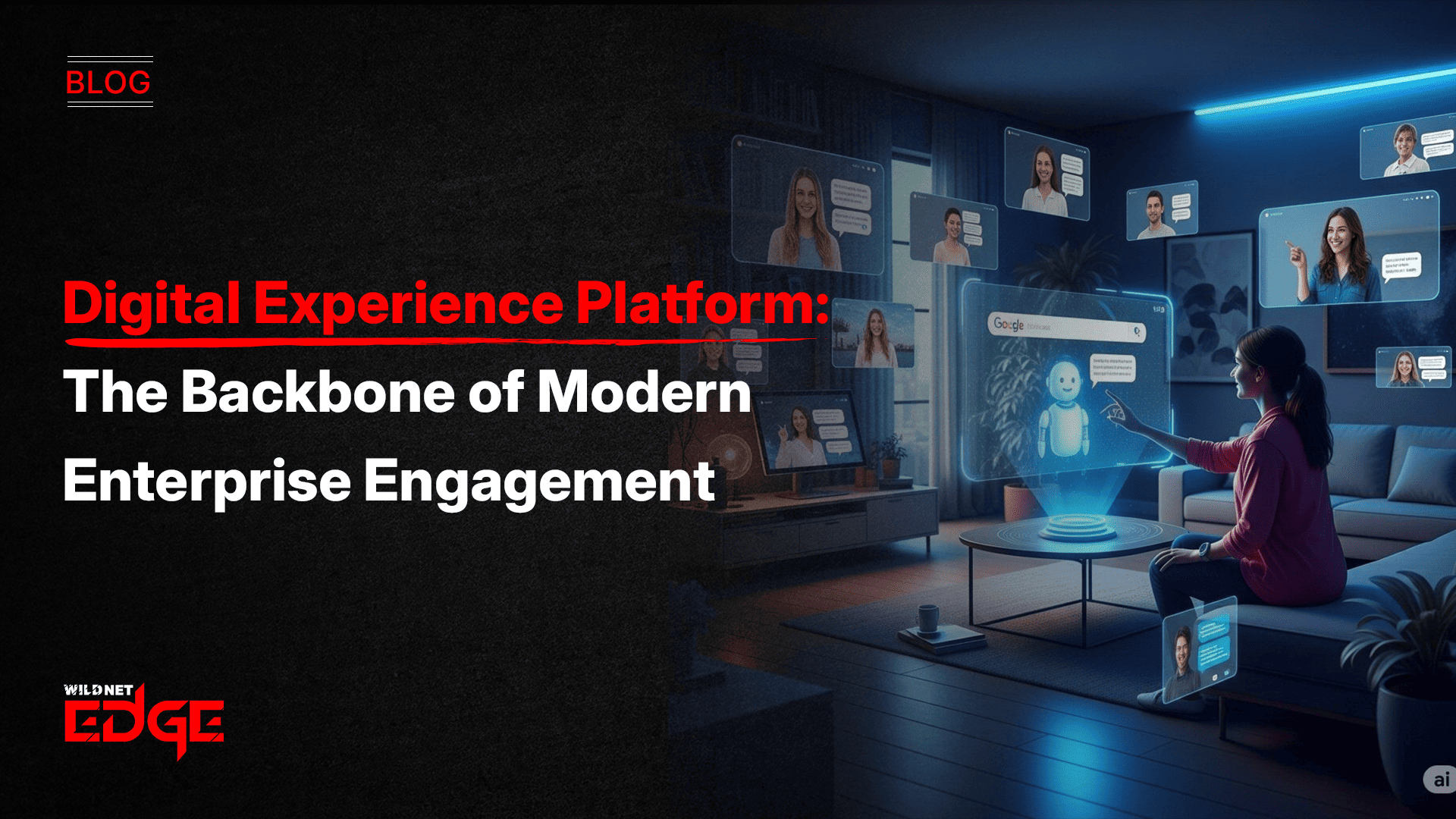
A Digital Experience Platform helps enterprises deliver consistent, personalized experiences across every channel customers use today. It connects content, data, and systems into one engine, enabling omnichannel experience delivery, smarter customer journey management, and faster execution. For experience-led companies, a DXP is no longer optional—it is how digital engagement scales in 2026.
A website alone cannot carry a business anymore. Customers move between mobile apps, websites, chatbots, kiosks, and emails without thinking twice. They expect the experience to follow them smoothly and without friction.
This is where a Digital Experience Platform becomes essential. Instead of managing channels one by one, enterprises manage the experience as a whole. A DXP connects content, data, and delivery so every interaction feels intentional. It does not just publish information. It responds to context, behavior, and intent in real time.
From Content Management to Experience Management
Traditional CMS tools were built for pages. Enterprises now need systems built for people.
A Digital Experience Platform goes beyond publishing. It combines content, personalization, analytics, and integrations into a single framework. Content adapts to who the user is, where they are, and what they are trying to do. This shift is what separates experience-led companies from those still stuck managing static websites.
Composable DXPs push this further. Instead of one heavy suite, enterprises choose best-in-class tools and connect them through APIs. This keeps the platform flexible, future-ready, and faster to evolve.
The Omnichannel Imperative
Customers expect consistency. They do not care which internal system serves them.
A Digital Experience Platform ensures pricing, messaging, and personalization stay aligned across web, mobile, email, kiosks, and emerging channels. Headless architecture allows teams to design any frontend they want while keeping content and logic centralized. This makes omnichannel experience delivery reliable instead of fragile. Developers can use modern web development frameworks (like React or Vue) to build fast, custom frontends for any device, while the heavy lifting of logic and data happens in the background.
Data-Driven Personalization
Generic experiences no longer work. DXP benefits become clear when personalization kicks in. By connecting to customer data, a Digital Experience Platform builds real-time profiles and adapts content instantly. A returning user sees relevant offers. A new visitor sees guidance, not noise. AI strengthens this by predicting intent. Search results improve. Recommendations feel timely. Content stops guessing and starts responding.
Mastering Customer Journey Management
Journeys do not move in straight lines. They loop, pause, and restart. A Digital Experience Platform supports customer journey management by tracking behavior across channels and triggering the right actions at the right time. If a user abandons a form, the system follows up. If they convert, the experience shifts to onboarding and retention. This orchestration happens automatically, without manual coordination across tools.
Enterprise Content Systems at Scale
Large organizations produce massive amounts of content. Without structure, it becomes unmanageable.
A Digital Experience Platform unifies enterprise content systems into a single source. Teams create content once and reuse it everywhere. Governance workflows ensure compliance, approvals, and brand control without slowing delivery. This balance of speed and control is critical at enterprise scale. Partnering with experts in DXP development ensures these workflows are customized to fit complex organizational hierarchies.
No enterprise runs on a single tool.
A DXP is designed to integrate with CRM, ERP, commerce, analytics, and marketing systems. API-first architecture allows data to flow freely, breaking silos across departments.
Because the platform is modular, teams launch faster. New campaigns, microsites, and features go live in days, not months. This speed is a major competitive advantage. This agility is often the catalyst for broader digital transformation initiatives across the enterprise.
Real Business Value of DXP
DXP benefits show up quickly and clearly:
- Higher conversions through personalization
- Lower operational effort through unified content
- Better retention through consistent journeys
Experience-led companies outperform competitors because they remove friction at every step. A platform with digital transformation makes that possible at scale.
Future-Proofing
Investing in a Digital Experience Platform is an investment in the future. As new channels emerge (like Spatial Computing), the DXP is ready to serve them. You don’t need to rebuild your backend every time a new iPhone comes out; you just add a new “head” to the system.
Case Studies: Experience in Action
Real-world examples illustrate the power of these systems.
Case Study 1: Global Airline Personalization
- The Challenge: An airline had fragmented data. The website didn’t know the customer had just complained on the app.
- The Solution: We implemented a composable Digital Experience Platform. It unified passenger data across booking, check-in, and loyalty systems.
- The Result: If a flight was delayed, the website automatically showed rebooking options on the homepage. Customer satisfaction scores (NPS) rose by 15 points due to this responsive omnichannel experience.
Case Study 2: B2B Manufacturer Scale
- The Challenge: A manufacturer with 50 brands struggled to manage 50 different websites.
- The Solution: We consolidated them into a single ecosystem with multi-tenant capabilities.
- The Result: They reduced maintenance costs by 40% and launched new brand sites in weeks instead of months, leveraging shared enterprise content systems.
Future Trends: AI Agents and Beyond
The platform is becoming autonomous.
Generative DXP
In the near future, you won’t manually build pages. You will tell the system: “Create a campaign for our new sneaker targeting Gen Z in Japan.” Generative AI will assemble the layout, write the copy, and select the images automatically, requiring only human approval.
Spatial Web Integration
As the “Metaverse” or Spatial Web matures, the Digital Experience Platform will manage 3D assets just like it manages images today. It will serve interactive holograms to AR glasses, ensuring the brand experience extends into the virtual world.
Conclusion
Customer expectations are rising faster than most enterprise systems can handle. A Digital Experience Platform closes that gap. It replaces disconnected tools with a unified experience engine that adapts in real time.
Enterprises that invest in a DXP stop chasing channels and start shaping journeys. They move faster, personalize better, and stay relevant as new touchpoints emerge. In 2026, digital leadership is defined by experience, and a DXP is what makes that leadership possible. At Wildnet Edge, our experience-first approach ensures we build platforms that don’t just deliver content, but deliver value. We partner with you to turn your digital presence into your greatest competitive advantage.
FAQs
A CMS is used for the management of content that is going to be published on the internet, while a DXP takes care of the digital user, providing him with great experiences through all the different channels (web, app, social, and IoT). To the already existing functions of a CMS, a DXP adds some more like electronic commerce, personalization, searching, and customer data management.
Not at all. You can use a composable DXP and keep your existing tools like the CRM and the Commerce engine, the only thing that will change is that they will be connected through APIs to the new platform. It will not be necessary major changes in the beginning.
Every industry that has complicated customer journeys will be benefited. In the case of the financial services sector, healthcare, retail, and manufacturing, they are the ones that mainly implement the technology since they have to continuously manage the security of the data, its personalization, and the content across various touchpoints.
The timeframe is different for each case. A monolithic implementation usually lasts 6-12 months. A composable approach, on the other hand, allows for value delivery in as little as 3 months by launching one channel or feature at a time and thus facilitating phased rollouts.
In the past, it was the case. But now, there are lightweight and cloud-based DXP solutions available for mid-sized businesses, which can provide the main advantages of personalization and omnichannel delivery at a much lower price than that of an enterprise DXP.
It combines and keeps tracks of the behaviors and actions of the users through the different channels and thus creates a single profile. After that, it applies the automation rules to send the right content to the user at the right time like sending a follow-up email in case of cart abandonment, leading the user to the next step.
Look for “Headless” content management, robust API connectivity, built-in analytics, personalization engines, and security compliance. A good DXP must be flexible enough to adapt to future technologies you haven’t even thought of yet.

Managing Director (MD) Nitin Agarwal is a veteran in custom software development. He is fascinated by how software can turn ideas into real-world solutions. With extensive experience designing scalable and efficient systems, he focuses on creating software that delivers tangible results. Nitin enjoys exploring emerging technologies, taking on challenging projects, and mentoring teams to bring ideas to life. He believes that good software is not just about code; it’s about understanding problems and creating value for users. For him, great software combines thoughtful design, clever engineering, and a clear understanding of the problems it’s meant to solve.

 based on 1200+ reviews



