


AI in Cybersecurity: Benefits, Risks, and How Businesses Can Stay Protected
 By Vidit Kumar
6 Mins read
Cyber threats are becoming harder for businesses to spot and stop. This is where AI in Cybersecurity can make a real difference. From finding unusual activity to helping teams respond to threats faster, AI is changing how businesses protect their data and systems. The benefits of AI in cybersecurity can be especially useful for businesses that need faster threat detection and stronger protection without putting everything on their security teams. But AI is not a magic solution. Businesses also need the right security practices and people in place to make sure these tools are used effectively.
What Is AI in Cybersecurity?
AI in Cybersecurity means using smart computer systems to help identify, understand, and respond to security threats.
Instead of waiting for someone to notice something unusual, these systems can look through large amounts of activity and flag anything that seems out of place. For example, if an employee’s account suddenly tries to access sensitive files at an unusual time, the system can raise an alert.
This can help businesses react sooner and reduce the chances of a small security issue turning into a major problem.
What Are the Benefits of AI in Cybersecurity?
There are several reasons businesses are turning to AI-powered cybersecurity to strengthen their security efforts.
Faster Threat Detection
A security team may receive thousands of alerts every day. Going through every alert manually can take time, and important warnings can sometimes get missed.
AI can review activity much faster and point out patterns that may indicate a threat. This gives security teams a better chance of dealing with a problem before it causes serious damage.
Quicker Response to Attacks
When a threat is detected, every second matters. AI can help businesses take quick action, such as blocking suspicious activity or limiting access to an affected account.
This does not mean people are removed from the process. Instead, AI can handle routine actions while security professionals focus on bigger decisions.
Better Protection Around the Clock
Cyberattacks do not follow business hours. A threat can happen late at night, during weekends, or while a team is away.
AI-powered systems can monitor continuously, helping businesses spot unusual activity even when fewer people are available to respond.
Less Time Spent on Routine Tasks
Security professionals often spend a lot of time reviewing alerts and checking activity. AI can help with these repetitive tasks, giving teams more time to investigate serious threats and improve overall security.
Businesses without a dedicated security team can work with professional cybersecurity services to strengthen their protection and respond to threats more effectively.
What Are the Risks of AI in Cybersecurity?
While AI can strengthen a business’s security, there are also important risks of AI in cybersecurity that organisations should understand before relying on these tools.
Attackers Can Use AI Too
The same technology that helps businesses find threats can also help criminals create more convincing scams, automate attacks, and find weak points faster.
This means businesses cannot simply adopt AI and assume they are protected. Their security measures need to keep improving as threats change.
False Alerts Can Still Happen
AI can make mistakes. It may sometimes flag normal activity as suspicious or fail to recognise a new type of threat.
That is why human review remains important. Security teams should be able to check important alerts rather than blindly trusting every recommendation.
Sensitive Information Needs Careful Handling
AI systems may need access to large amounts of business information to work effectively. Businesses must be careful about what information they collect, where it is stored, and who can access it.
Clear rules around data access and privacy should be in place before introducing new AI-based security tools.
Common AI Cybersecurity Threats Businesses Should Watch
Understanding AI cybersecurity threats is just as important as understanding the benefits.
One major concern is AI-assisted phishing. Attackers can create messages that look more convincing and are harder for employees to recognise as fake.
Another concern is automated attacks. Criminals can use AI to search for weaknesses, change their approach, and target businesses more quickly.
There is also the risk of businesses becoming too dependent on automated systems. If employees stop checking important alerts because they assume the system will catch everything, a serious threat could slip through.
The best protection combines technology with good security habits and trained people.
How Businesses Can Use AI Cybersecurity Solutions Safely
The right AI cybersecurity solutions should support your existing security efforts rather than replace them.
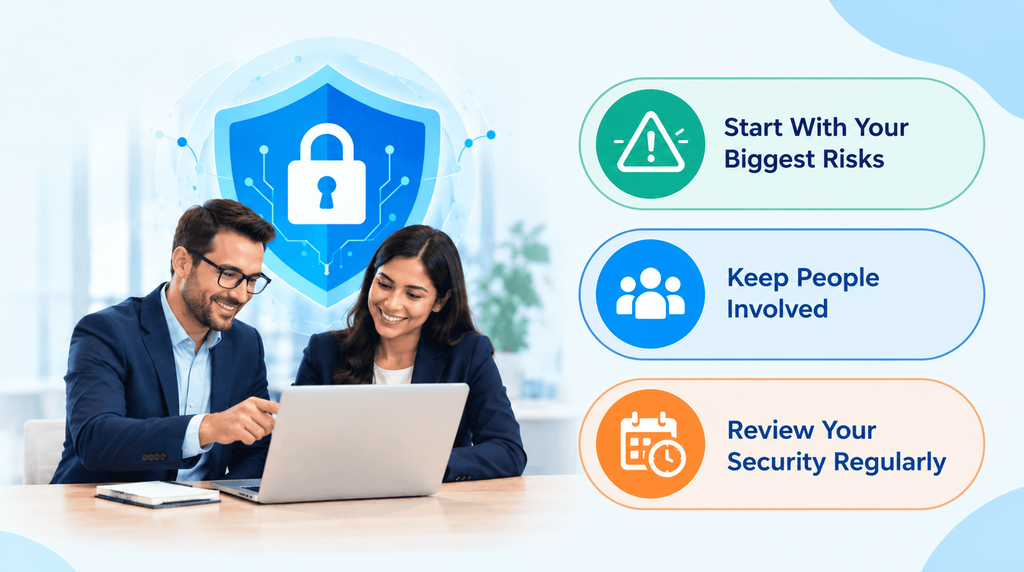
Start With Your Biggest Risks
Every business has different security needs. A healthcare company may be more concerned about protecting patient information, while an online retailer may focus heavily on customer accounts and payment data.
Start by identifying the areas that would cause the most damage if compromised. Once these risks are clear, businesses can choose AI-powered cybersecurity solutions that address their specific security needs instead of adopting tools that may not be relevant to them.
Keep People Involved
AI can spot patterns and handle routine tasks, but people still need to make important decisions.
Create clear rules for when a security professional should review an alert, approve an action, or investigate an incident further.
Review Your Security Regularly
Security cannot be treated as a one-time task. New threats appear all the time, and your business changes as you add employees, applications, devices, and customers.
Regular reviews can help you identify gaps and make sure your protection still fits your business.
A strong cyber risk management approach can help businesses identify their most vulnerable areas and decide where additional protections are needed.
AI in Cybersecurity: Finding the Right Balance
The biggest mistake businesses can make is treating AI as a complete replacement for their security teams.
The real value of AI in Cybersecurity comes from combining speed and automation with human judgment. AI can help find unusual activity, sort through large amounts of information, and respond quickly. People can then investigate serious incidents, make decisions, and improve security policies.
Businesses should also remember that their security needs will change over time. What works today may not be enough tomorrow.
For organisations exploring AI-powered cybersecurity, a sensible starting point is to identify their most important data and systems, understand their current risks, and then choose solutions that address those specific needs.
Final Thoughts
AI in Cybersecurity gives businesses a powerful way to improve threat detection, speed up responses, and reduce the pressure on security teams. At the same time, the risks of AI in cybersecurity should not be ignored. Attackers can use AI too, and businesses still need strong policies, regular checks, and human oversight.
The goal is not to rely on AI alone. It is to use it alongside people and proven security practices to create stronger protection.
As threats continue to change, businesses that take a balanced approach to AI cybersecurity solutions can stay better prepared without losing sight of the most important part of cybersecurity: protecting their people, data, and customers.
Frequently Asked Questions
How does AI detect suspicious activity in a business?
AI can look for unusual changes in normal business activity, such as unexpected login attempts, unusual access to files, or activity from unfamiliar locations. When something looks different from the usual pattern, it can alert the security team so they can take a closer look.
Can AI help prevent phishing attacks?
Yes. AI can help identify suspicious emails and messages by looking for signs that may indicate a scam. However, employees still need to be careful before clicking links, opening attachments, or sharing sensitive information.
Is AI cybersecurity expensive for businesses?
The cost depends on the size of the business, the systems being protected, and the type of security support required. Businesses do not necessarily need to adopt every available tool. Starting with the areas that carry the greatest risk can be a more practical approach.
Does AI replace cybersecurity professionals?
No. AI can help security teams handle large amounts of information and spot potential problems faster, but people are still needed to investigate serious incidents, make important decisions, and manage the wider security strategy.
What should a business look for in an AI cybersecurity solution?
A business should look for a solution that matches its specific security needs, works with its existing setup, provides useful alerts, and allows people to review important decisions. Ease of use and reliable support are also worth considering.


