


AI Security vs Traditional Cybersecurity: What’s Changing?
 By Vidit Kumar
5 Mins read
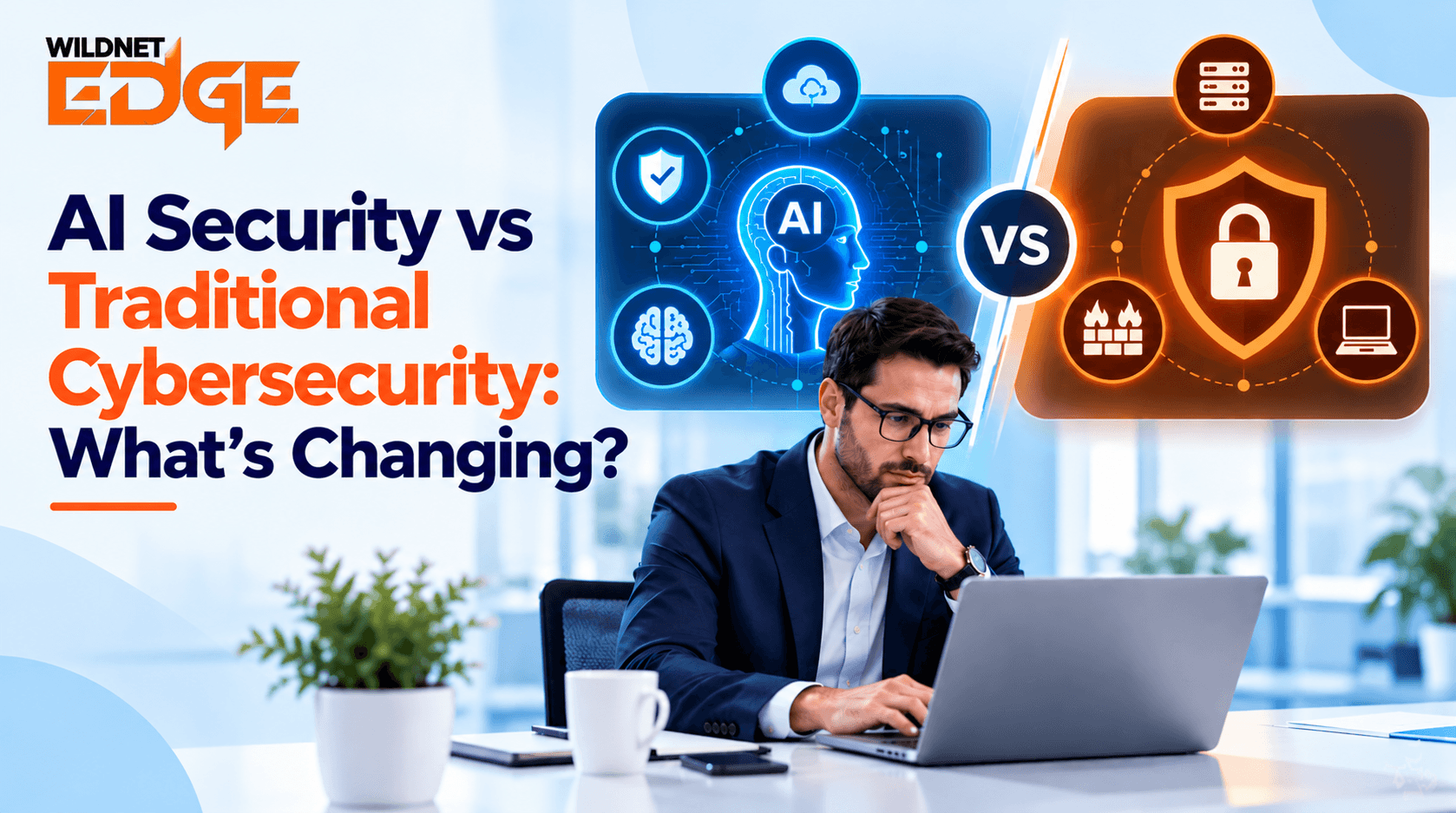
Cyber threats are becoming harder to spot, and businesses are looking for better ways to protect their systems and information. The difference between AI security vs traditional cybersecurity is becoming more important as companies explore new ways to detect suspicious activity. While traditional security methods remain essential, AI security can help businesses identify unusual behaviour, handle large amounts of information, and respond to potential threats more quickly. But does AI make traditional cybersecurity outdated? Not at all. The real opportunity lies in using both approaches together.
What Is the Difference Between AI Security and Traditional Cybersecurity?
The main difference between AI security vs traditional cybersecurity is how each approach identifies potential threats.
Traditional cybersecurity often relies on established security rules, known threat patterns, regular checks, and human decision-making. This works well for known threats, but unfamiliar attacks can take longer to recognise.
AI security looks at activity and identifies patterns that appear unusual. It can help security teams notice behaviour that does not fit what is normally expected.
In simple terms:
- Traditional cybersecurity focuses heavily on known threats and established security rules.
- AI security looks for unusual patterns and behaviour.
- Traditional methods may require people to review more alerts manually.
- AI can help sort information and highlight activity that needs attention.
- Both approaches can work together to provide stronger protection.
How Is AI Security Changing Cybersecurity?
The growing use of AI security solutions is changing how businesses manage everyday security. Security teams can receive a huge number of alerts, making it difficult to determine which ones require immediate attention.
AI can help by reviewing activity and identifying patterns that might otherwise be missed. For example, if an employee suddenly accesses a large amount of sensitive information at an unusual time, the activity could be flagged for further investigation.
This does not mean people are no longer needed. Instead, AI can take care of some of the repetitive work, giving security professionals more time to investigate serious concerns and make important decisions.
AI Security vs Traditional Cybersecurity: Key Differences
| Area | Traditional Cybersecurity | AI Security |
| Threat detection | Often focuses on known threats and rules | Looks for unusual patterns and behaviour |
| Response | Can involve manual investigation | Can help speed up the response |
| Large amounts of information | Can be harder to review manually | Can process large amounts of information quickly |
| New threats | May take longer to identify | Can flag unusual activity |
| Human involvement | Often needed for investigation | Still important for decisions and oversight |
The point is not to choose one approach over the other. Businesses need strong security basics, while AI can provide additional support as threats continue to change.
What Are the Benefits of AI Security Solutions?
Businesses are increasingly considering AI security solutions because they can make security work faster and more manageable.
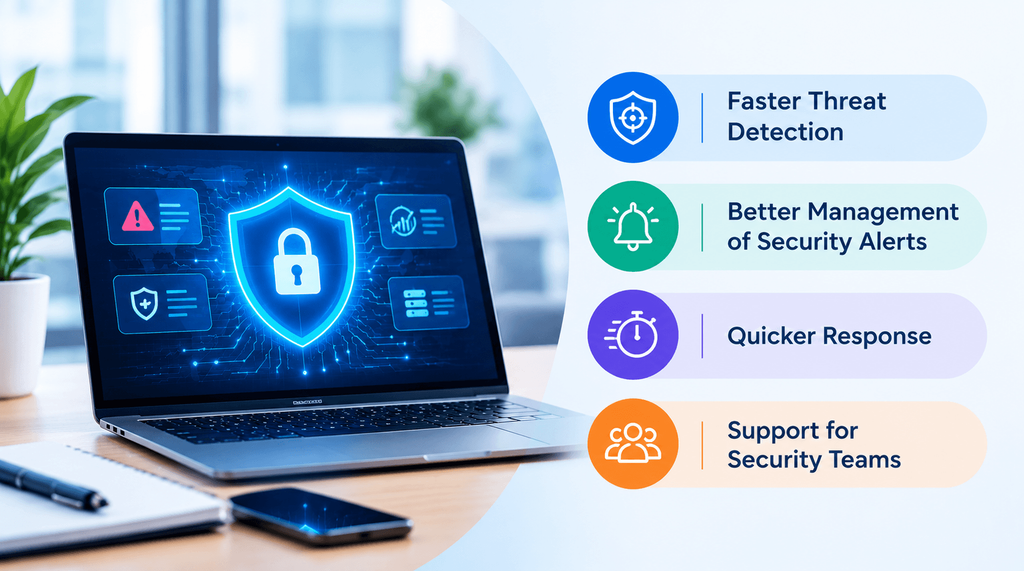
Faster Threat Detection
AI can review activity continuously and flag behaviour that looks unusual. This can help security teams investigate potential problems earlier.
Better Management of Security Alerts
Too many alerts can make it difficult for teams to identify genuine concerns. AI can help organise this information and bring potentially important issues to the forefront.
Quicker Response
Finding suspicious activity early gives businesses more time to investigate and take action. This can help limit the opportunity for an attacker to cause further damage.
Support for Security Teams
AI can handle some repetitive tasks, allowing security professionals to spend more time on investigations, decisions, and security planning.
As businesses grow, protecting employees, customer information, applications, and connected systems becomes more challenging. Enterprise Cybersecurity Solutions can help businesses bring these different areas of protection together and create a stronger security setup.
What Are the Risks of AI Security?
While AI can offer several benefits, businesses also need to consider AI security risks.
AI systems can sometimes flag normal behaviour as suspicious. If this happens too often, security teams may spend valuable time investigating harmless activity. There is also a risk of relying too heavily on automated decisions without proper human review.
Another concern is that attackers can use AI as well. They may use it to create more convincing scams, automate certain activities, or find weaknesses more quickly.
For this reason, businesses should have clear rules around how AI is used for security. Regular reviews, human oversight, and strong security practices remain important.
Why Does Traditional Cybersecurity Still Matter?
The growing use of AI does not make traditional cybersecurity unnecessary.
Security measures such as access controls, secure passwords, software updates, employee awareness, and data protection still form the foundation of a strong security plan.
In fact, AI security vs traditional cybersecurity should not be viewed as a choice between old and new. Traditional protection provides the foundation, while AI can add another layer of support.
Adding new security tools is only part of the solution. Businesses also need a clear cyber security strategy that defines how they will prevent threats, respond to incidents, and protect important information.
How Can AI Cyber Security Solutions Work With Existing Security?
The most practical approach for many businesses is to combine established security practices with AI cyber security solutions.
For example, a company could use traditional security controls to restrict access to sensitive information while using AI to identify unusual login behaviour. If something appears suspicious, the system can alert the security team, who can investigate and decide what action is appropriate.
This allows businesses to improve their security without abandoning the measures they already rely on.
As cyberattacks become harder to spot, businesses are also looking for better ways to identify suspicious activity early. AI-driven threat detection can help security teams notice unusual behaviour and investigate potential threats before they become bigger problems.
For organisations managing large and complex environments, an AI security platform can also help bring different security activities together and give teams a clearer view of what is happening.
What Does the Future of AI Security Look Like?
The future of cybersecurity is likely to involve a combination of people, established security practices, and AI.
AI will continue to help businesses identify unusual behaviour, review large amounts of information, and support faster responses. However, human judgement will remain important because unusual activity does not always mean an attack is taking place.
Businesses should also continue reviewing their AI security risks as their systems, employees, and digital services change.
The goal should not be to rely entirely on AI. Instead, businesses can use it where it provides real value while maintaining the security practices and human oversight they already need.
Final Thoughts
The discussion around AI security vs traditional cybersecurity is not really about which one should replace the other. Traditional cybersecurity provides the foundation businesses need, while AI security solutions can make threat detection and response faster and more manageable.
The strongest approach is to combine both. With established security practices, AI-powered protection, and human oversight working together, businesses can be better prepared for the threats they face today and those that may emerge tomorrow.
Frequently Asked Questions
1. Can AI security work without traditional cybersecurity?
Not effectively on its own. AI security works best when supported by basic security measures such as access controls, software updates, data protection, and employee security practices. AI can add another layer of protection, but it does not replace the security foundation a business needs.
2. Is AI security suitable for small businesses?
Yes. Small businesses can use AI security solutions to help monitor activity and identify suspicious behaviour without needing a large security team. The right option depends on the company’s size, systems, budget, and the type of information it needs to protect.
3. How does AI help detect unknown cyber threats?
AI can look for activity that is unusual compared with normal behaviour. For example, an unexpected change in login patterns, unusual access to files, or activity from an unfamiliar location may raise a warning. This can help security teams investigate threats that may not match previously known attack patterns.
4. What should businesses consider before adopting AI security?
Businesses should consider how the solution handles their information, how alerts are reviewed, how much human involvement is required, and whether it fits their existing security setup. It is also important to understand the AI security risks involved rather than choosing a solution simply because it uses AI.


