



Cloud Migration & Optimisation
Migrate with Confidence. Optimise for Performance and Cost
Move workloads securely with a structured approach that assesses dependencies, controls migration risk, protects continuity, and improves cloud performance and spend around your business priorities.
- Cloud Migration & Optimisation Expertise
- Secure, Phased Migration Planning
- Cost and Performance Optimisation
- AWS, Azure & Google Cloud
- Ongoing Cloud Support
Our Technology Partners
Built on Trusted Technology Platforms
We work across leading cloud, CRM, and AI platforms, so every recommendation is based on what fits your business, not a single vendor.







The Challenge
Cloud Migration & Optimisation: What Businesses Need to Solve
Cloud migration becomes challenging when legacy infrastructure, unclear dependencies, rising costs, and operational requirements create risks that businesses cannot afford to overlook.
- Legacy infrastructure can create capacity constraints, maintenance overhead, and slower release cycles as business requirements continue changing.
- Undocumented applications and dependencies can make migration planning uncertain, increasing the possibility of disruption during workload transitions.
- Overprovisioned, idle, or poorly matched resources can increase cloud spending without delivering corresponding business value.
- Security, data residency, access controls, and compliance requirements must be considered before workloads and sensitive information move.
- A simple lift-and-shift approach can carry existing performance, scalability, and cost problems into the cloud environment.
- Business-critical workloads require careful consideration of continuity, dependencies, migration sequencing, testing, and rollback requirements.
- The right approach should connect migration decisions with business priorities, operational needs, performance expectations, and long-term cloud costs.
A structured migration and optimisation approach helps businesses move with greater clarity while preparing the cloud environment for sustainable operations.
Our Expertise
Our Cloud Migration & Optimisation Services
Our cloud migration services cover the critical stages of moving, improving, and managing workloads while keeping business priorities, risk, performance, and cost considerations in focus.
Cloud Readiness & Dependency Assessment
Identify applications, infrastructure, dependencies, constraints, and migration risks to establish clear workload readiness before migration decisions are made.
Cloud Migration Strategy & Roadmap
Prioritise workloads, select suitable migration approaches, sequence migration waves, establish ownership, and define success criteria around business value and operational requirements.
Application, Database & Workload Migration
Plan and execute workload transitions with data validation, cutover planning, rollback options, testing, and stakeholder communication throughout migration activities.
Cloud Modernisation & Replatforming
Identify workloads where targeted changes, including opportunities to containerise applications for cloud deployment, can improve maintainability, scalability, or deployment speed.
Cloud Cost Optimisation & FinOps
Improve cloud cost visibility through rightsizing, idle-resource identification, storage strategies, tagging, budgets, usage tracking, and appropriate allocation accountability.
Cloud Performance & Scalability Optimisation
Assess bottlenecks, workload behaviour, autoscaling, database performance, and resilience to identify improvements supporting stronger performance and sustainable scalability.
Industries
Cloud Migration Solutions Built Around Your Industry
Every industry has different workloads, compliance needs, and operational pressures, so migration planning should reflect how your business actually operates.
Banking & Financial Services
Move critical workloads with stronger controls for security, resilience, performance, and operational continuity.
Healthcare & Life Sciences
Protect sensitive workloads with secure migration planning built around data access, continuity, and regulatory requirements.
Technology & SaaS
Support faster releases and growing workloads with scalable infrastructure, predictable performance, and controlled cloud spending.
Retail & E-commerce
Handle changing customer demand with scalable infrastructure, optimised cloud costs, and reliable application performance.
Media & Entertainment
Scale content platforms and digital workloads while managing performance, storage requirements, and unpredictable traffic.
Manufacturing
Modernise operational workloads while improving scalability, connectivity, performance, and visibility across cloud environments.
Education & EdTech
Support digital learning platforms with scalable infrastructure, secure data handling, and dependable application performance.
Real Estate
Modernise property platforms and business applications with scalable infrastructure, secure data, and better operational efficiency.
Our Approach
Our Cloud Migration Process
DISCOVER
Map applications, infrastructure, dependencies, constraints, and migration risks before deciding what moves first.
PRIORITISE
Group workloads by business importance, dependencies, readiness, and risk to build practical migration waves.
DESIGN
Define target architecture, security controls, governance, access, and safeguards around your workloads, supported by cloud infrastructure management.
VALIDATE
Test a pilot migration, verify data integrity, validate performance, and address issues before scaling.
MIGRATE
Move workloads in planned waves with testing, stakeholder communication, cutover steps, and rollback readiness.
BASELINE
Review performance, reliability, and cloud spending to establish clear benchmarks for ongoing improvements.
OPTIMISE
Continuously improve costs, performance, reliability, monitoring, and automated build and deployment pipelines after migration is complete.
Cost Control
Cloud Cost Optimisation: Turning Spend into Visibility and Control
Cloud cost optimisation services should focus on understanding where and why money is being spent before deciding where changes are appropriate.

Cost Allocation & Tagging
Create clearer ownership through consistent tagging and allocation practices across workloads, teams, and environments.

Usage Baselines
Establish usage patterns that make changing demand, unusual consumption, and optimisation opportunities easier to identify.

Idle-Resource Detection
Identify unused or underused resources that continue generating costs without providing corresponding workload value.

Rightsizing
Match resources more closely to actual demand while protecting required performance, availability, and resilience.

Storage Lifecycle Policies
Review storage usage and lifecycle requirements to determine where appropriate storage tiers can improve cost efficiency.

Autoscaling
Use workload demand to inform scaling decisions rather than maintaining unnecessary capacity.

Commitments & Reservations
Evaluate commitment discounts or reservations where usage patterns make them appropriate and commercially sensible.

Budgets & Forecast Alerts
Create budget and forecast visibility so teams can identify changing spend before it becomes difficult to control.

Balance Cost With Service Levels
Cost reduction should not mean indiscriminate downsizing; performance, availability, and resilience remain part of every decision.

Make Optimisation Repeatable
Establish recurring reviews, clear ownership, and an optimisation backlog so improvements continue as workloads and demand change.
Security & Continuity
Security, Compliance & Business Continuity During Migration
Migration planning should build security, governance, and continuity requirements into workload decisions rather than treating them as final-stage checks.

Identity & Access Management
Define appropriate identities, permissions, and least-privilege access before workloads and data transition into the target environment.

Encryption & Secrets Handling
Protect information through encryption in transit and at rest, alongside appropriate handling of credentials and secrets.

Network Segmentation
Design network boundaries supporting workload isolation, controlled communication, and appropriate access requirements.

Logging & Monitoring
Maintain relevant visibility into activity, system behaviour, and operational events throughout migration and after cutover.

Backup & Recovery
Plan backup and recovery requirements alongside migration activities, particularly for workloads with higher business criticality.

Vulnerability Review
Assess relevant vulnerabilities through cloud security and risk assessment before migration and address identified risks according to workload requirements.

Compliance Alignment
Map controls to applicable regulatory and contractual obligations without making unsupported certification or compliance claims.

Business Continuity
Define migration windows, data reconciliation, testing, communication, and rollback criteria according to workload criticality.
Downtime and migration risk depend on workload architecture, dependencies, criticality, and the migration approach selected.
What Sets Our Approach Apart
Why Choose Wildnet Edge for Cloud Migration & Optimisation
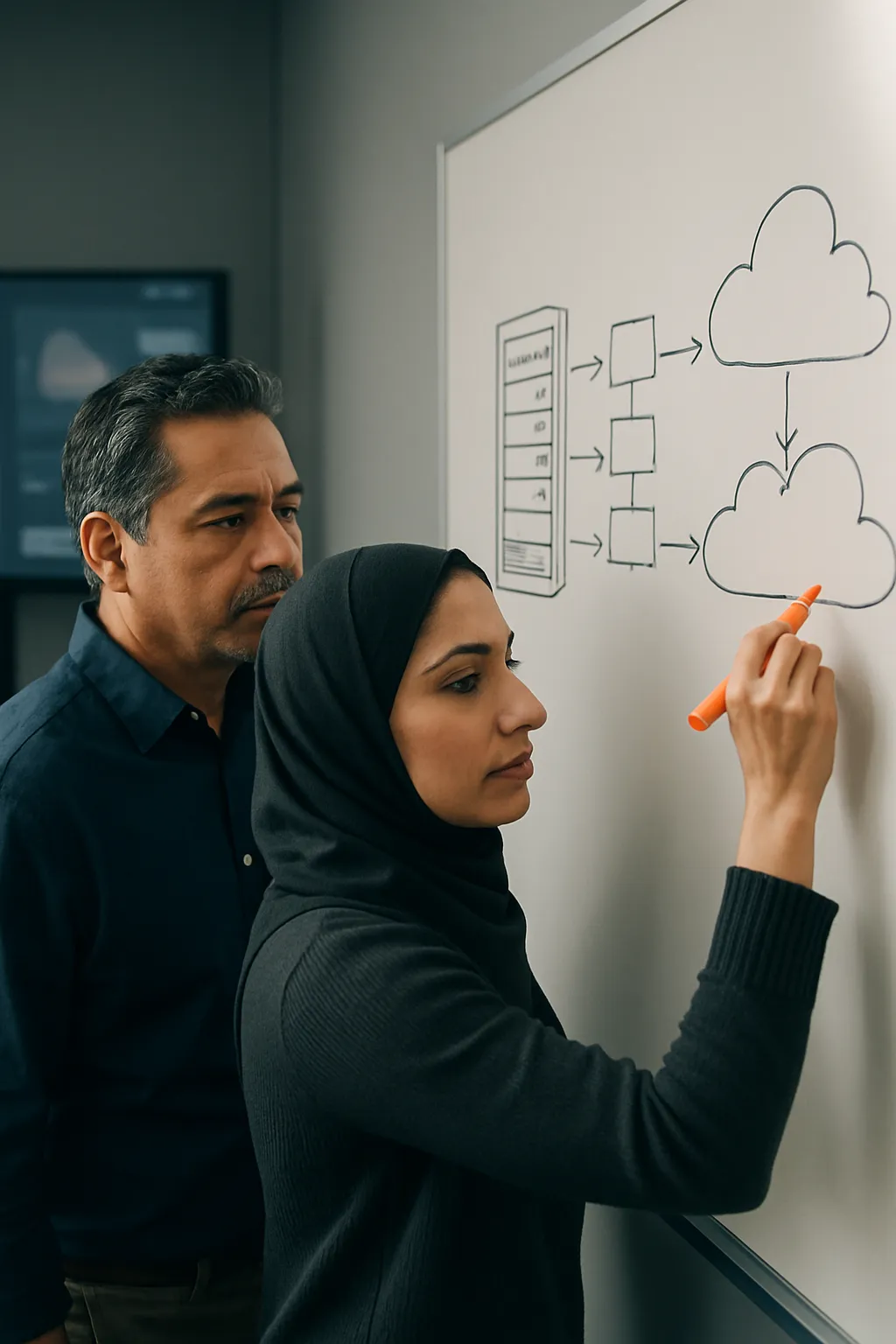
Wildnet Edge approaches migration as a business and operational transformation rather than simply a workload-moving exercise. The focus remains on practical decisions, controlled execution, security, and post-migration improvement.
Business-Aligned Migration Roadmap
Connect workload decisions with growth priorities, business risk, operating models, budget considerations, and practical migration requirements.
Migration Plus Post-Migration Optimisation
Support extends beyond cutover, including DevOps practices for reliable releases and ongoing improvements after workloads transition.
Security & Governance Built Into Planning
Define controls, ownership, governance requirements, and validation expectations before workloads move into the target environment.
Transparent Delivery & Risk Management
Use milestones, decision gates, issue tracking, testing, and rollback planning to keep migration decisions visible and controlled.
Flexible Engagement & Knowledge Transfer
Align support with internal cloud-team capacity, including AWS development and engineering support, while documenting the resulting environment and transferring relevant operational knowledge.
Engagement Models
Cloud Migration Engagement Models
Choose an engagement approach based on your workload scope, migration complexity, internal capabilities, and level of support required.

Fixed-Scope Migration Assessment
Includes: Defined workload inventory, risk review, dependency assessment, and migration roadmap deliverables.
Client-dependent: Scope depends on workload count, complexity, available information, and assessment requirements.
Phased Workload Migration
Includes: Migration waves, milestones, validation activities, cutover preparation, and rollback support.
Client-dependent: Timelines and sequencing depend on workload complexity, dependencies, data volume, and downtime requirements.
Dedicated Cloud Engineering Team
Includes: Ongoing engineering capacity supporting migration, modernisation, optimisation, and related cloud initiatives.
Client-dependent: Team scope aligns with internal capabilities, workload requirements, priorities, and delivery responsibilities.
Continuous Optimisation Support
Includes: Recurring reviews covering cloud cost, performance, security, reliability, and optimisation opportunities.
Client-dependent: Review frequency and scope depend on workload changes, operating requirements, and internal ownership.
In Their Words
Rated 4.89 across 104 reviews
Quotes are from engineering and product leaders, the people who own the outcome.

“Partnering with Wildnet Edge was a game-changer for our department. Their deep understanding of government processes, combined with cutting-edge AI capabilities, helped us modernize outdated systems with minimal disruption. The result? A faster, smarter, and more transparent public service delivery model.”

“Wildnet Edge truly exceeded our expectations. Their AI-first approach helped us streamline product development and automate key workflows, allowing our team to focus on innovation. Their proactive collaboration and agile execution felt like having a tech co-founder on our side.”

“Working with Wildnet Edge was transformative. They brought deep expertise in AI, cloud, and agile delivery that enabled us to modernize legacy systems without disruption. Their ability to deliver complex solutions at scale made them an essential partner in our digital evolution.”
Straight answers
The questions you were going to ask on the call.
Clear expectations make better partnerships. Here is where the conversation starts.
What do cloud migration and optimisation services include?
Cloud migration services can include readiness assessment, dependency mapping, migration strategy, workload migration, modernisation, cost optimisation, performance improvement, security planning, governance, and post-migration support.
How much do cloud migration services cost?
Costs depend on workload count, application complexity, data volume, dependencies, migration approach, and downtime requirements. A scoped assessment can establish the work involved before pricing is determined.
How long does a cloud migration project take?
Migration timelines depend on workload complexity, dependencies, data volume, business criticality, testing requirements, and the selected migration strategy. A phased roadmap can establish practical sequencing before execution begins.
Can you migrate workloads without downtime?
Downtime cannot be universally guaranteed or eliminated. Achievable outcomes depend on workload architecture, criticality, dependencies, migration approach, cutover planning, and required business continuity measures.
How do you choose between rehosting, replatforming, and refactoring?
The decision depends on business value, technical debt, risk, cost, timeline, performance requirements, dependencies, licensing, and the long-term operating model for each workload.
How can we reduce cloud costs after migration?
Review usage baselines, idle resources, rightsizing, storage tiers, autoscaling, tagging, budgets, forecasts, and appropriate commitments while protecting performance, availability, and resilience.
Can you migrate workloads across AWS, Microsoft Azure, Google Cloud, or hybrid environments?
Migration planning can address AWS, Microsoft Azure, Google Cloud, or hybrid environments. The appropriate approach depends on workload architecture, dependencies, requirements, and the target operating model.
How do you protect data and maintain business continuity during migration?
Planning can include encryption, access controls, backup and recovery, testing, data reconciliation, migration windows, stakeholder communication, and rollback criteria based on workload criticality.
Contact Us
Let’s Build for Outcome
Let’s co-create solutions that deliver measurable impact.

Get started
The Technology Edge Your Business Deserves.
A working session, not a pitch. 30 minutes session on solving your problem.
Prefer to just pick a time?Book a 30-minute roadmap call →